
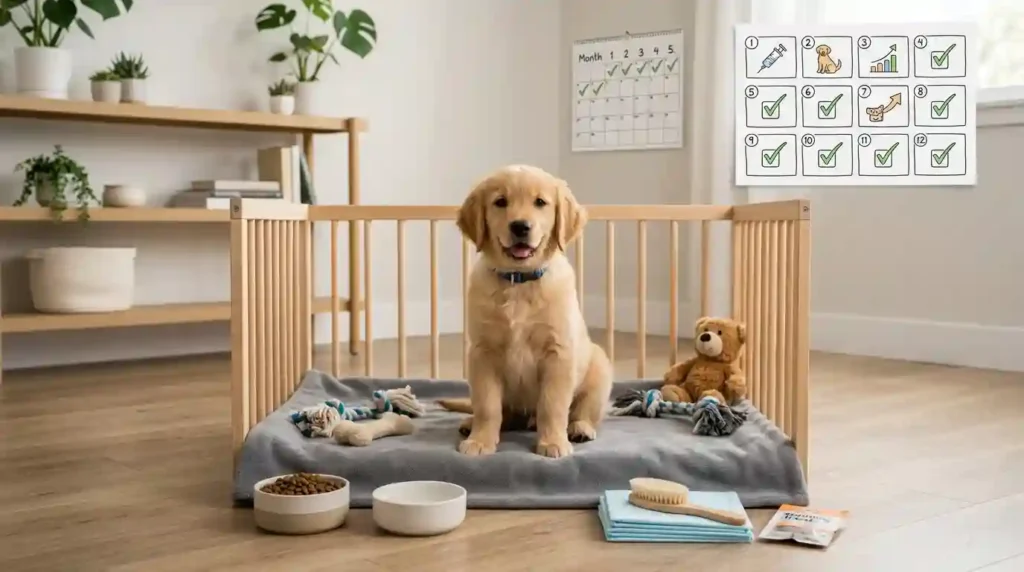
It was 6:15 a.m. in Denver, and my coffee was still cooling on the counter. My puppy was already chewing a phone charger. “আরে বাবা, এটা আবার মুখে নিলে কেন?” I said. That means, “Oh no, why did you put that in your mouth again?” I have been through this morning many times, and this first-year puppy care guide is the plan I wish I had on day one. It covers health, food, training, safety, and daily habits, one month at a time.
What Does a Puppy Need in the First Year?
The first year feels chaotic because everything happens at once. Your puppy grows fast. Your puppy learns fast too. A simple system helps you see what needs attention now and what can wait.
The American Animal Hospital Association (AAHA) treats puppyhood as its own life stage. Puppies have different needs for food, vaccines, behavior, and dental care. So a good plan covers more than shots.
The Five Main Puppy-Care Areas
I sort every task into five buckets:
- Veterinary care
- Nutrition and growth
- Training and socialization
- Grooming and dental care
- Safety and daily routine
When I feel lost, I ask which bucket I have ignored this week. That one question fixes most problems.
Why Puppyhood Is Different From Adult Dog Care
Puppies are not small adult dogs. They:
- Grow very fast
- Have immune systems that are still developing
- Need a different diet
- Need guidance on behavior all day
- Love to chew unsafe things
- Need careful, structured social exposure
- Need exercise that fits their age
Adult dogs can handle a missed walk. A puppy who misses key learning windows may struggle later.
The First-Year Puppy Care Toolkit
Good records make this year easier. I keep these tools in one place:
- A puppy care checklist
- A vaccine tracker
- A deworming and parasite tracker
- A feeding tracker
- A weight tracker
- A training planner
- A pet expense calculator
- A vet appointment reminder
You can build them on paper or online. The point is to write things down. Your memory will not hold a full year of puppy details.
First-Year Puppy Care Timeline at a Glance
A puppy’s needs change quickly. You do not need to memorize every task. A simple month-by-month map shows what matters now. Your vet still customizes the plan for your puppy.
| Puppy Age | Main Priorities | Useful Tool |
|---|---|---|
| 8 to 10 weeks | Vet exam, vaccines, potty training, safe socialization | Puppy health checklist |
| 10 to 12 weeks | Training, socialization, parasite care | Vaccine tracker |
| 3 to 4 months | More training, growth checks, grooming | Puppy growth tracker |
| 4 to 6 months | Teething, training, exercise changes | Training tracker |
| 6 to 9 months | Teen behavior, weight, preventive care | Wellness tracker |
| 9 to 12 months | Move to adult routine, health review | Puppy-to-adult planner |
Exact vaccine and medical timing varies by puppy and by veterinarian. Treat this table as a map, not a prescription.
Before Bringing Your Puppy Home
Good puppy care starts before the puppy arrives. A little prep saves a lot of stress.
Choose a Veterinarian
Pick your vet early. I ask these questions:
- Do you see puppies often?
- How do you approach vaccines?
- How do you handle parasite prevention?
- Which emergency clinic do you suggest?
- Do you offer behavior advice?
The American Veterinary Medical Association (AVMA) suggests a vet exam soon after you bring a puppy home. Bring any vaccine and deworming records to that visit. If you want help choosing, read our guide on choosing the right veterinarian.
Puppy-Proof the Home
Get down on your hands and knees. Look at the room from your puppy’s view. Then check for:
- Electrical cords
- Cleaning products
- Medications
- Small objects
- Toxic plants
- Open trash cans
- Open doors
- Unsafe balconies or stairs
I once found a missing sock in my puppy’s bed, and I was the lucky one. Small items can block a puppy’s gut.
Prepare a Puppy Supply Kit
Gather these before pickup day:
- Food and bowls
- Collar and ID tag
- Leash
- Crate or safe play area
- Bedding
- Puppy-safe toys
- Grooming tools
- Waste bags
- Cleaning supplies
- Car restraint
Buy fewer things at first. You will learn what your puppy really needs within two weeks.
The First 24 Hours With Your Puppy
The first day should be calm. It is not a neighborhood parade. Your puppy just left everything familiar.
Let the Puppy Explore Slowly
Show one room at a time. Let your puppy sniff. Keep visitors away for now. Quiet days build confidence.
Set Up a Safe Sleeping Area
Place the crate or bed in a quiet spot. Many owners keep it close to their own bed at first. Your puppy hears you and feels safer. There is no single right way to handle night one. Do what keeps your puppy and your household calm.
Keep Food Changes Gradual
Ask the breeder or shelter what your puppy ate. Start with that food. If you switch, do it slowly over several days. Sudden changes often cause upset stomachs.
Start a Potty Routine Immediately
Take your puppy out right after waking, eating, and playing. Use the same spot. Praise and reward every success. Start on day one.
Begin Gentle Handling
Touch paws, ears, mouth, and body for a few seconds. Give a treat each time. This makes vet visits and grooming much easier later.
Record What You Notice
Write down a few simple things:
- Appetite
- Stool
- Water intake
- Sleep
- Energy
- Behavior
This gives you a baseline. Your vet will love it if something changes.
First Veterinary Visit and Puppy Wellness Care
I consider vet care the backbone of the first year. Everything else sits on top of it.
What Happens During a Puppy Exam?
Expect your vet to review:
- A full physical exam
- Weight and body condition
- Vaccine history
- Parasite risk
- Nutrition
- Dental development
- Behavior
- Exercise
- Preventive care
Bring a list of questions. Puppy visits go fast, and it is easy to forget things.
Puppy Vaccination Schedule
Vaccines come in groups:
- Core vaccines protect against common, serious diseases.
- Lifestyle vaccines depend on where you live and what your dog does.
- Rabies follows local law.
- Boosters keep protection strong over time.
AAHA’s canine vaccination guidance lists distemper, adenovirus, parvovirus, leptospirosis, and rabies as core. The 2024 update added leptospirosis to that list. Other vaccines depend on lifestyle, geography, and risk.
I will not give you one fixed calendar. Puppies differ, and so do regions. Your vet sets the schedule.
How a Puppy Vaccine Tracker Helps
A tracker keeps your records in one spot. Include:
- Vaccine name
- Date given
- Next due date
- Clinic
- Notes
- Lifestyle risk
You will need these records for boarding, grooming, and training classes. Our pet health calculator page can help you organize them.
Puppy Parasite Prevention and Deworming
Puppies often pick up intestinal parasites early. That makes this a must-know topic.
Common Puppy Parasites
Learn these names:
- Roundworms
- Hookworms
- Whipworms
- Fleas
- Ticks
- Heartworms
Some of these can spread to people, too. That is one more reason to stay on top of prevention. Read more in our parasite prevention basics guide.
Puppy Fecal Testing
The Companion Animal Parasite Council (CAPC) recommends intestinal parasite testing at least four times in the first year of life. Your vet may adjust this based on health and lifestyle. Bring a fresh stool sample when asked.
Deworming and Preventive Medication
CAPC supports year-round, broad-spectrum parasite control. It also has early deworming protocols for puppies. Your vet picks the product and timing. Never guess a dose or use a dog product for a different pet. Follow the label and your vet’s directions.
Puppy Parasite Tracker
Use a simple table like this:
| Item | Date | Next Due | Notes |
|---|---|---|---|
| Fecal test | Date done | Per vet advice | Result |
| Deworming | Date given | Per vet advice | Product name |
| Flea and tick prevention | Date given | Per product schedule | Exposure risk |
| Heartworm prevention | Date given | Per product schedule | Product prescribed |
Set phone reminders for each row. Missed doses are one of the easiest mistakes to make.
Feeding Your Puppy for Healthy Growth
Think growth and body condition. Do not think “more food because he is growing.” That thinking leads to overfeeding.
Choose an Appropriate Puppy Diet
Look for a complete and balanced food made for puppies. Check the label for a statement that the food meets growth needs. Size and breed matter too. Ask your vet to confirm the choice. If you switch foods, mix old and new over several days.
How Often Should Puppies Eat?
Young puppies usually eat more often. Meals per day tend to drop as they grow. The right number depends on age, size, and health. Your vet can suggest a plan for your puppy.
Large-Breed Puppy Nutrition
Large-breed puppies grow in a special way. Growing too fast can stress their joints and bones. Overfeeding can do real harm. Ask your vet about a large-breed puppy formula and a safe growth pace.
Monitor Body Condition, Not Just Weight
A puppy can gain weight and still look too thin or too heavy. Learn to check body condition. You should feel the ribs with light pressure. You should see a slight waist from above. Ask your vet to show you how at the next visit.
Puppy Feeding Calculator
A feeding calculator can give a helpful starting point. A good one looks at:
- Age
- Weight
- Expected adult size
- Activity
- Food calories per cup
- Body condition
Treat the result as an estimate. It is not a vet prescription. Try our best healthy weight calculator for dogs as a starting point, then review the number with your vet.
Puppy Growth and Weight Tracking
No two puppies grow at the same pace. Even littermates can differ.
Why Puppy Weight Changes So Fast
Puppies can gain weight every week. Growth comes in bursts. Breed and adult size change everything. A tiny breed and a giant breed follow very different curves.
How Often Should You Weigh a Puppy?
Weekly checks work for many owners, but it depends. Age, size, and health all matter. Ask your vet what fits your puppy. Use the same scale at the same time of day for clean data.
Puppy Growth Calculator
A good growth tool tracks:
- Current weight
- Age
- Breed or size group
- Growth trend
- Body condition
- Vet notes
The trend matters more than any single number. A line that moves steadily is usually a good sign.
When a Growth Trend Needs Attention
Call your vet if you see:
- Sudden weight loss
- Poor growth
- Fast gain with no clear cause
- Appetite changes
- Digestive trouble that lasts
A calculator cannot diagnose a problem. It can only tell you when to ask a question.
Puppy Socialization in the First Year
I think socialization is the most misunderstood part of puppy care. It does not mean letting your puppy meet every dog in town.
What Puppy Socialization Really Means
Socialization means helping your puppy feel safe around new things. That includes:
- People
- Other dogs
- Sounds
- Floor surfaces
- Vehicles
- Grooming
- Handling
- New places
- Vet visits
Quality beats quantity. One calm, positive moment is better than ten scary ones.
The First Three Months Matter
The American Veterinary Society of Animal Behavior (AVSAB) calls the first three months the main socialization window. It recommends safe exposure to new people, animals, sights, and places during that time. What a puppy learns now shapes adult behavior.
Can Puppies Socialize Before All Vaccines Are Finished?
Yes, with care. AVSAB supports safe socialization before the vaccine series ends. It asks owners to use controlled settings and follow health precautions. Waiting too long carries its own risk, since fear problems can grow. Talk to your vet about what is safe in your area.
Safe Socialization Ideas
Try these:
- Carry your puppy outside to watch the world
- Meet healthy, vaccinated dogs you know
- Join a well-run puppy class
- Take short car rides
- Walk on different floor surfaces
- Play recorded household sounds softly
- Practice gentle grooming
Always pair new things with treats. Keep sessions short and happy.
Places to Avoid
Skip areas with unknown or unvaccinated dogs until your vet says it is safe. Crowded dog parks are a common example. Pet store floors and busy sidewalks can also carry germs.
Puppy Training Basics
Start early, and stay kind. Training is not a battle of wills.
Positive Reinforcement Training
AVSAB recommends reward-based training. Consistent, positive methods are linked to fewer behavior problems. Reward what you like. Calmly redirect what you do not.
Potty Training
Keep it simple:
- Follow a steady schedule
- Go out after meals
- Go out after naps
- Supervise closely
- Reward success right away
- Clean accidents with a pet-safe cleaner
Never punish accidents. Your puppy will just learn to hide them.
Crate or Safe-Space Training
Make the crate a happy place. Toss treats inside. Feed meals there. Keep the door open at first. AAHA’s 2026 puppy guidance stresses building positive feelings about the crate instead of forcing a puppy in. Never use the crate as punishment.
Basic Cues
Teach these one at a time:
- Name
- Sit
- Come
- Leave it
- Drop it
- Stay
- Loose-leash walking
Practice in short sessions. Five minutes, a few times a day, works well.
Puppy Teething and Dental Care
At some point, your puppy will treat your furniture like a dental tool. It is normal, and it is temporary.
When Puppy Teething Happens
Puppies lose baby teeth and grow adult teeth over several months. Gums may feel sore. Chewing rises during this time. Your vet can check that teeth are coming in well.
Safe Chew Options
Pick chews made for puppies. They should not be rock hard. A simple test: if you would not want it hitting your knee, skip it. Always supervise chewing.
Protecting Furniture and Cords
Use gates and closed doors. Spray cords with a pet-safe deterrent if your vet approves. Trade a bad chew for a good one. Praise the swap.
Introducing Tooth Brushing
Start with a finger and a taste of pet toothpaste. Never use human toothpaste. Move to a soft brush later. Keep it short and sweet.
When a Puppy Tooth Needs Veterinary Attention
Call your vet about a broken tooth, bleeding, swelling, or a baby tooth that stays put. Do not pull teeth at home. Let a professional handle it.
Puppy Exercise and Play
Puppies need activity. But “tire the puppy out” should not be your only plan.
Age-Appropriate Exercise
Young bodies are still growing. Short walks and gentle play work best. Avoid hard, repeated jumping and long runs. Breed, size, health, and climate all change the answer. Check our best dog exercise calculator for a starting idea.
Free Play vs Structured Exercise
Free play builds joy. Structured exercise builds skills. Mix both. A short training walk can be as tiring as a long run.
Mental Enrichment
Brain work tires puppies fast. Hide treats. Rotate toys. Let your puppy sniff on walks.
Puzzle Toys and Sniffing Games
Try a snuffle mat or a treat puzzle. Scatter kibble in the grass. These games calm busy puppies and cost very little.
Signs the Puppy Needs a Break
Watch for heavy panting, slow steps, lying down, or sudden biting. These are cues to stop. A nap is often the best toy.
Puppy Grooming Routine
Treat grooming as a life skill, not a beauty routine. A puppy who enjoys being handled makes every vet and groomer visit easier.
Brushing
Start with a soft brush for a minute a day. Give treats. Match the brush to the coat type.
Bathing
Bathe only when needed. Use a puppy-safe shampoo. Keep water warm and the mood calm.
Nail Trimming
Touch paws daily first. Then clip just the tip. Ask your vet or groomer to show you the right spot.
Ear Handling
Lift the ear flap gently. Look for redness, odor, or debris. Call your vet if something looks off.
Paw Handling
Hold each paw for a second, then reward. Build slowly. Paws are sensitive for most puppies.
Groomer Visits
Book a short first visit. Let your puppy meet the groomer and leave happy. Skip the full haircut at first.
Puppy Safety and Puppy-Proofing
Safety is an everyday habit. It is not a one-time job.
Common Household Hazards
Watch for:
- Electrical wires
- Human medications
- Cleaning chemicals
- Toxic foods
- Small objects
- Certain plants
- Open windows
- Pools
- Stairs
Save your vet and an emergency clinic in your phone today.
Outdoor Safety
Use a leash or secure fence. Add an ID tag. Get a microchip and keep the record current. Watch what your puppy sniffs and eats. CAPC recommends permanent ID, safe containment, and quick cleanup of dog waste to lower parasite spread.
Car Safety
Use a crate or a car harness made for dogs. Never leave a puppy alone in a vehicle. Heat rises fast, even on mild days.
First-Year Puppy Care by Age
This is your practical roadmap. Use it with your vet’s plan.
8 to 12 Weeks
Focus on:
- First vet visit
- Vaccine plan
- Parasite prevention
- Potty training
- Safe socialization
- Gentle handling
- A steady sleep routine
3 to 4 Months
Focus on:
- Continued vaccines per your vet
- Training
- Socialization
- Teething
- Grooming
- Growth tracking
4 to 6 Months
Focus on:
- Teething care
- Stronger training habits
- Weight checks
- Preventive care
- Exercise changes
6 to 9 Months
Focus on:
- Teen behavior
- Impulse control
- Recall
- Leash skills
- Ongoing socialization
- A vet review
9 to 12 Months
Focus on:
- Move to an adult routine
- Nutrition review
- Steady training
- Preventive care review
- Long-term health planning
First-Year Puppy Care Timeline Table
Use this table as a quick dashboard. It does not replace your vet’s plan. It only helps you remember the main areas as your puppy grows.
| Age | Health | Training | Home Care | Tracking |
|---|---|---|---|---|
| 8 to 10 weeks | First exam, vaccine review | Name, potty routine | Puppy-proofing | Health record |
| 10 to 12 weeks | Vaccine and parasite follow-up | Socialization | Grooming practice | Vaccine tracker |
| 3 to 4 months | Preventive review | Recall, leash skills | Teething care | Weight tracker |
| 4 to 6 months | Vet-guided care | Impulse control | Dental routine | Training log |
| 6 to 9 months | Wellness review | Teen training | Exercise changes | Wellness tracker |
| 9 to 12 months | Adult-care planning | Reliable basic cues | Routine change | Yearly summary |
First-Year Puppy Care Costs
Many new owners budget for food and forget the rest. Vet care, supplies, training, and prevention add up fast.
Common First-Year Expenses
Plan for:
- First vet exam
- Vaccines
- Parasite tests and prevention
- Food
- Crate and bed
- Collar and leash
- Toys
- Grooming
- Training
- Microchip
- Spay or neuter, where appropriate
- Emergency savings
Puppy Cost Calculator
Here is a simple formula: monthly costs + (yearly care ÷ 12) + emergency savings. Try our pet cost calculator or the pet budget calculator to run your numbers. A pet expense tracker helps you see where money goes each month.
Why Puppy Costs Are Often Higher in Year One
Costs fall into four groups:
- Setup costs: crate, bed, gear
- Routine costs: food, treats, waste bags
- Preventive care: vaccines, tests, prevention
- Surprises: illness, injury, swallowed socks
The first and last groups are the ones that hurt most in year one.
USA Expert Advice for First-Year Puppy Care
I lean on named sources, not vague claims. Here is what they say.
AAHA Guidance on New Puppies
AAHA’s current puppy guidance covers puppy-proofing, crate training, socialization, training, and daily routines. Its vaccine guidance also says lifestyle, location, and personal risk should shape what a dog receives.
Expert Reference: Kathy Callahan
AAHA’s June 2026 puppy guidance features Kathy Callahan, author of Welcoming Your Puppy From Planet Dog. Her point, in short, is that new owners should not feel there is only one right way to handle the first night. I find that comforting. Please read the original quote on AAHA’s site rather than relying on my paraphrase.
What the Veterinarian Should Personalize
Your vet should tailor:
- Vaccines
- Parasite prevention
- Nutrition
- Exercise
- Socialization risk
- Spay or neuter timing
- Breed and size care
No article, including this one, can do that for you.
Real-Life First-Year Puppy Care Example
This is a composite story, built from common owner experiences.
Milo’s First Year
Milo came home at nine weeks. His owner lived in Chicago. Her goal was simple: build a healthy routine without feeling overwhelmed.
Milo’s Morning Routine
Every day looked the same:
- Potty break
- Breakfast
- Short training
- Nap
Kibble rattled into the bowl. Tiny claws tapped across the floor. One sock vanished, as socks do.
Milo’s Weekly Routine
Once a week, she did:
- A weight check
- Grooming practice
- A training review
- A supply check
Milo’s Monthly Routine
Once a month, she did:
- Reviewed parasite prevention
- Updated the care tracker
- Checked expenses
- Looked at upcoming vet visits
The routine was boring. That was the secret. Boring routines build healthy dogs.
Puppy Care Tools and Calculators
Tools remove guesswork. Here are the ones I use most.
Puppy Growth Calculator
It tracks weight and growth trends over time. Look at the curve, not one day.
Puppy Feeding Calculator
It estimates food needs from age, weight, and activity. Your vet’s advice always comes first.
Puppy Vaccine Tracker
Log the vaccine, date, next visit, clinic, and notes.
Puppy Parasite Tracker
Track prevention products and fecal tests in one place.
Puppy Training Tracker
Track commands, potty wins, socialization, and behavior goals.
Puppy Cost Calculator
Track food, vet care, training, grooming, supplies, insurance, and emergency savings.
Puppy Wellness Dashboard
Put it all together: health, weight, vaccines, parasites, training, and costs. A pet wellness calculator can help you see the full picture.
Common First-Year Puppy Care Mistakes
I have made a few of these myself.
Waiting Too Long for the First Vet Visit
Book the exam within the first days. Early checks catch hidden problems.
Treating Vaccines as a One-Size-Fits-All Schedule
Risk changes by region and lifestyle. Follow your vet, not a chart from the internet.
Avoiding All Socialization Until Vaccines Are Complete
Waiting for weeks with no safe exposure can cause fear later. Ask your vet about safe options.
Socializing Too Quickly or Overwhelming the Puppy
Too much at once can backfire. Go slow. Watch your puppy’s body language.
Using Punishment-Based Training
Harsh methods can harm trust and raise fear. Reward-based training works better.
Overfeeding Because the Puppy Looks Hungry
Puppies beg. That does not mean they need more. Measure meals.
Ignoring Body Condition
The scale alone can mislead you. Check ribs and waist, too.
Forgetting Parasite Prevention
One missed month can matter. Use reminders.
Exercising Too Much
Too much running can stress growing joints. Keep it gentle.
Forgetting Dental Care
Start brushing early. Small habits now save big bills later.
Letting the Puppy Chew Unsafe Objects
Keep cords, shoes, and small items out of reach. Offer better choices.
Not Tracking Health Records
Lost records cause repeat shots and missed doses. Keep one file.
When Should a Puppy See a Veterinarian?
Keep this simple. When in doubt, call.
Routine Puppy Visits
Puppy visits cover vaccines, parasite checks, growth, nutrition, and behavior questions. They are how small issues get caught early.
Signs That Need Prompt Veterinary Attention
Get help right away for:
- Trouble breathing
- Collapse
- Repeated vomiting
- Severe diarrhea
- Suspected poisoning
- Serious injury
- Extreme tiredness
- Not keeping water down
Know your nearest emergency clinic. Our guide on emergency situations that need immediate veterinary care can help you prepare. Also read pet first aid basics. An online calculator can never replace a vet’s exam.
How to Build a First-Year Puppy Care Calendar
A calendar ties everything together. Use your phone or a wall planner.
Add Veterinary Appointments
Book the next visit before you leave the clinic.
Add Vaccine Reminders
Set an alert a week before each due date.
Add Parasite Prevention
Pick one day each month. Repeat it.
Add Grooming Tasks
Schedule brushing, nail checks, and tooth brushing.
Add Training Goals
Pick one new skill each month.
Add Weight Checks
Set a weekly or biweekly slot, as your vet suggests.
Add Budget Reviews
Check spending on the first of each month. A preventive veterinary care plan can help you budget ahead.
First-Year Puppy Care Checklist
Save this list and check items off as you go.
Health
- First veterinary exam
- Vaccine plan
- Parasite prevention
- Fecal testing
- Microchip and ID
- Wellness follow-ups
Nutrition
- Right puppy diet
- Feeding schedule
- Weight tracking
- Body condition checks
Training
- Name recognition
- Potty training
- Crate or safe-space training
- Basic cues
- Leash training
- Positive socialization
Grooming
- Brushing
- Nail handling
- Ear handling
- Tooth brushing
- Groomer introduction
Safety
- Puppy-proofed home
- Safe toys
- Emergency contacts
- Pet first-aid kit
- Car safety
New to pets overall? Start with our beginner pet care guide.
First-Year Puppy Care FAQ
What should I do during my puppy’s first year?
Cover the basics: vet care, vaccines, parasite prevention, good food, socialization, training, grooming, dental care, and safety. Track it all in one place.
When should a new puppy see a veterinarian?
Soon after you bring your puppy home. AVMA recommends an early exam. Follow-up visits vary by puppy, so your vet sets that schedule.
How often do puppies need vaccines?
Puppies usually get a series of shots over several weeks. The exact timing is set by your vet based on age, health, and risk.
When should I start socializing my puppy?
Start early and do it safely. AVSAB supports safe socialization before the vaccine series ends. Do not wait until everything is complete.
How often should a puppy be dewormed?
It depends on age, product, and your vet’s plan. CAPC recommends early and ongoing parasite control, plus fecal tests at least four times in year one.
How often should I feed my puppy?
Meal counts change with age, size, and food type. Young puppies eat more often. Ask your vet for a schedule.
What should I track during my puppy’s first year?
Track weight, vaccines, parasite prevention, vet visits, training, diet, grooming, and costs. A simple pet health tracker makes it easy.
Final Recommendation
If I could give one piece of advice, it would be this. Build one simple system and stick with it. You do not need perfect training or a perfect schedule. You need steady habits, a good vet, and records you can trust.
Start with the vet visit. Add safe socialization, reward-based training, and parasite prevention. Track weight and costs each month. Expect messy days. Every owner has them.
Use this first-year puppy care guide as your map, and let your vet fill in the details. Your puppy will grow fast. Your routine will grow with them. By month twelve, you will look back and wonder where the time went. You might even find the sock.

Shakitul Alam is the Chief Executive Officer and Founder of Pet Calculator. He holds a degree in Computer Science and Information Technology from the University of Texas at Dallas, combining advanced algorithmic engineering with a lifelong passion for animal welfare and pet health care.
As a recognized pet care technology expert, Shakitul has spent years researching and developing responsive, vet-approved digital tools that make pet wellness data accessible to millions of dog and cat owners nationwide. Under his leadership, Pet Calculator adheres to the highest standards by pairing precise mathematical modeling with published veterinary science.