
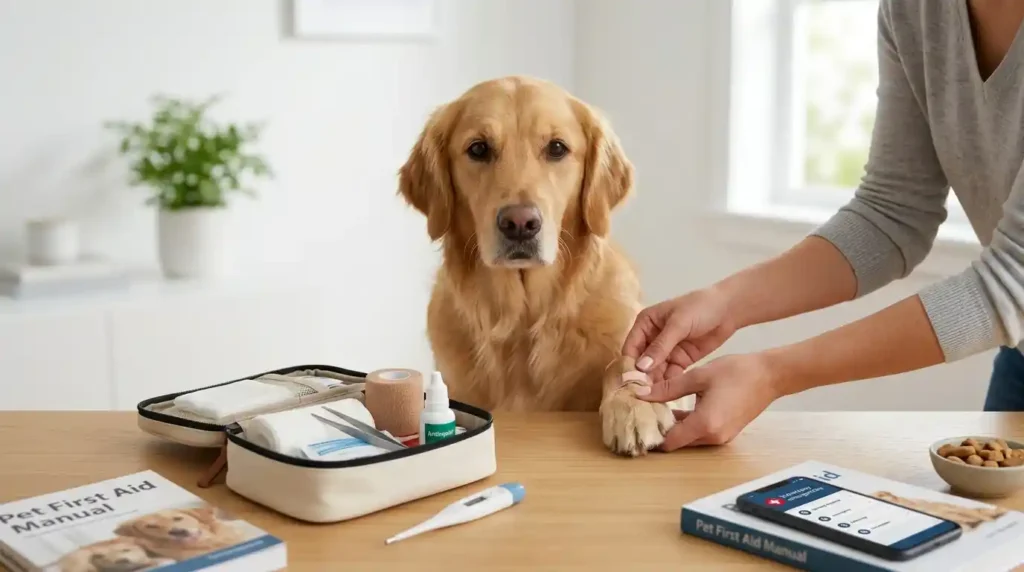
My dog’s antibiotics sat next to my coffee maker for three days. I forgot to move them. That small mistake got me serious about storing veterinary medicine safely. I live in Denver. The air is dry, the sun hits my kitchen window hard, and my Labrador treats every counter like a game. “Put it somewhere high” is not a real plan. This guide walks through what works. Room by room. Medicine by medicine. It’s based on FDA and AAHA guidance, plus my own trial and error.
Why Storing Veterinary Medicine Safely Matters
Bad storage creates two risks. First, your pet might get into the medicine by accident. Second, the medicine can lose strength in the wrong conditions. Both problems are common. Both are easy to prevent once you know what to watch for.
Medicines Can Be Damaged by Heat, Cold, Light, or Moisture
There is no single “right” temperature for every veterinary drug. Some pills are fine on a shelf. Others need a fridge. A few can’t handle direct sun at all. The FDA notes that storage conditions vary by product, so the label is always your first reference point.
A few things that commonly cause damage:
- Excessive heat, like a hot car or a sunny windowsill.
- Freezing temperatures for products that should never freeze.
- Direct sunlight breaking down active ingredients.
- Humidity from bathrooms and kitchens.
- Big swings between hot and cold, which stress the product more than steady heat alone.
Once a medicine degrades, it may not work as well as it should. This can happen even if the bottle looks fine. It can happen even if the expiration date hasn’t passed yet.
Pets Can Accidentally Eat Their Own Medicine
Dogs and cats are smart, and flavored tablets smell like a treat to them. A bottle on a counter is one knocked elbow away from the floor. “Out of reach” for a person is not always out of reach for a dog that jumps on furniture or a cat that opens cabinets. Pet medication storage has to account for the actual animal in your house, not a generic pet.
Human and Veterinary Medicines Can Be Mixed Up
Keeping human and animal medicine in separate spots sounds obvious, but grabbing the wrong bottle at 6 a.m. happens more than people admit. A human medicine that’s safe for you can be dangerous for a dog or cat. The FDA recommends storing animal drugs away from human medications for exactly this reason.
Read the Veterinary Medicine Label Before Storing It
Before you decide where a medicine goes, read the label. It tells you almost everything you need for safe veterinary medicine storage.
Look for the Storage Temperature
Labels usually spell this out in plain language:
- Refrigerate.
- Store at room temperature.
- Protect from light.
- Do not freeze.
- Keep tightly closed.
- Store in the original container.
Two products that treat the same condition can have very different instructions. Don’t assume one bottle’s rules apply to another.
Check the Expiration Date
Find the printed date before you store anything long term. An expired medicine should never be assumed safe or effective just because it’s still sealed. And here’s the part people miss: a medicine stored the wrong way can lose potency before that printed date ever arrives. Storage and expiration are connected, not separate issues.
Check Whether the Medicine Has Special Instructions After Opening
Some products change once you open them. This applies to:
- Liquid medications.
- Reconstituted medicines mixed by a pharmacy.
- Multi-dose bottles.
- Compounded veterinary medicines.
- Anything with a manufacturer “use by” period after opening.
Your vet or pharmacist may give you a specific window. For example, “use within 14 days of opening.” Write that date on the label with a marker. A simple storage checklist helps too. Record the opening date. Record the expiration date. Record the storage condition. Record which pet it belongs to. This solves most confusion before it starts.
Where Should You Store Veterinary Medicine at Home?
Choose a Cool, Dry, Secure Location
Good storage spots share a few traits:
- Stable room temperature.
- Low humidity.
- No direct sunlight.
- Away from sinks and showers.
- Out of reach for pets and kids.
- Separate from food storage, when the label calls for it.
A closet shelf works well. A labeled bin in a hallway cabinet works well too. So does a lockable box. All of these beat the usual default spots.
Why the Bathroom Cabinet May Be a Bad Choice
The bathroom “medicine cabinet” is one of the worst places for many medicines, and the name is misleading. Shower steam raises humidity every single day, and moisture is exactly what breaks down tablets and caps over time. If your bathroom cabinet is your current storage plan, it’s worth moving most products somewhere drier.
Avoid Kitchen Counters and Windowsills
Kitchens bring their own problems. There’s heat from the stove and appliances. There’s direct sun through the window. There are spills near the sink. And pets wander through constantly, looking for food. And honestly, the highest shelf is not much of a safety system if your cat treats shelves like a climbing gym. Pick a spot your specific pet actually cannot reach, not just a spot that looks high enough.
How to Store Refrigerated Veterinary Medicines
This is where I see the most mistakes, so it’s worth slowing down here.
Follow the Product’s Exact Temperature Range
“Refrigerate” is not the same instruction as a specific labeled range. Some products need a narrow window, like 36°F to 46°F. Don’t guess. If a medicine needs refrigeration, follow the exact range on the label. Or follow what your vet or pharmacist tells you. Don’t rely on a general guess about how cold a fridge should be.
Where to Put Medicine Inside the Refrigerator
A few practical rules:
- Avoid the door shelves if your instructions or vet advise against it. Door temperatures swing more than the main body of the fridge.
- Keep the container closed to protect it from spills and odors.
- Never let it touch the freezer coils or ice.
- Store it separately and label it clearly, especially if you keep human food in the same fridge.
Vaccines are a special case. AAHA recommends 36°F to 46°F (2°C to 8°C) for refrigerated canine vaccines. Place them in the center of the fridge for steady airflow. Monitor the temperature regularly. Keep the original packaging intact. But these are vaccine rules. Don’t apply them to every refrigerated medicine in your house.
What If the Medicine Was Accidentally Frozen or Left Out?
Don’t guess whether it’s still good. Here’s the sequence I follow:
- Check the product label for any freezing or temperature warnings.
- Note roughly how long it was outside the recommended range.
- Call the prescribing veterinarian or the dispensing pharmacist.
- Ask directly before giving another dose if there’s any doubt about stability.
A five-minute phone call beats giving your pet a medicine that might not work the way it should.
How to Protect Veterinary Medicine From Light and Moisture
Keep Light-Sensitive Products Protected
Some medicines break down under sunlight. That’s why they ship in dark amber bottles. Keep products in their original packaging when instructed. Never move them into a decorative jar just because it looks tidier on a shelf.
Keep Moisture Away
Moisture is a quiet threat because you often can’t see the damage happening. Keep caps tightly closed after every use, avoid bathroom shelves, and don’t store bottles beside sinks. When a label says “keep in a dry place,” it means exactly that.
Do Not Mix Medicines Into Unlabeled Containers
Original containers hold more than just the pills. They carry the drug name, the strength, the directions, and the expiration date. They show which pet it’s for. The FDA recommends keeping animal drugs in their original labeled containers. I’d add one thing. Even a well-organized pill box should never fully replace that original label. Keep the source bottle on hand.
How to Organize Multiple Pet Medicines Safely
If you have more than one pet, or one pet on several medications, organization stops being optional.
Create a Simple Pet Medication Station
I split mine into labeled sections:
- Current prescriptions.
- Supplements.
- Topical products.
- Refrigerated products (a labeled bin inside the fridge).
- Medicines waiting for proper disposal.
Don’t group everything into one bin just to save space. That’s how mix-ups happen.
Label Each Pet Clearly
Every container should show the pet’s name, the medicine name, the strength, dosing instructions, the prescribing veterinarian, and the expiration date. If you have two dogs on similar-looking pills, this step alone prevents the most common home dosing error.
Use a Medication Tracking Tool
A simple tracker, printed or digital, closes the gap that memory alone can’t cover.
| Field | What to Record |
|---|---|
| Pet | Name and species |
| Medicine | Drug or product name |
| Strength | mg, mL, etc. |
| Storage | Room temperature, refrigerator, etc. |
| Opened | Date opened |
| Expires | Printed or instructed date |
| Schedule | Dose frequency |
| Vet | Prescribing clinic |
A small tracker prevents surprisingly ordinary mistakes. The FDA encourages pet owners to keep a current list of their animal’s medications. This includes prescriptions. It includes over the counter products. It includes supplements too, especially before a vet visit.
Storing Different Types of Veterinary Medicine
Every format has its own quirks, so it helps to break this down by type instead of treating all medicine the same way.
Tablets and Capsules
Keep them dry, in the original packaging, and away from pets and kids. Check with your vet or pharmacist before splitting or crushing a tablet, since changing the form can change how it works.
Liquid Veterinary Medicines
Some liquids need a good shake before each dose. Ingredients settle over time. Close the cap firmly after every use. Use the measuring device that came with the product. Call your vet or pharmacist if you notice any change in color, smell, or texture.
Injectable Medicines
Injectables often have their own temperature and handling rules, separate from pills. Keep sterile products protected from contamination, and never assume an injectable can sit on a shelf the way a tablet can.
Topical Medicines
Creams, gels, sprays, and ointments still need secure storage. Pay extra attention to human topical products in your house. Some, like certain pain creams, can be dangerous if a pet licks them off skin or fabric.
Veterinary Vaccines
Vaccines depend on something called the cold chain. This means keeping the product at the right temperature. It has to stay right from manufacturing to the moment it’s given. Break that chain, and the vaccine may not protect your pet as well. This is why AAHA’s vaccine guidance is so specific. It shouldn’t be stretched to cover every other medicine in your cabinet.
What Veterinary Medicines Should Never Be Stored Together?
Keep Human and Animal Medicines Separate
Separate storage cuts down on mix-ups. It makes labels easier to double check. And it helps everyone in the house know which bottle belongs to which family member, two legged or four legged.
Keep Different Pets’ Medicines Clearly Separated
Don’t share one pet’s medicine with another unless your veterinarian specifically says to. Species, body weight, health conditions, and dosing can all differ enough to make a seemingly similar medicine unsafe for a different animal.
Separate Current and Expired Medicines
Old prescriptions sitting next to active ones is how people accidentally grab the wrong bottle. Pull expired products out right away and set them aside for disposal.
How to Store Veterinary Medicine During Travel
Protect Medicines From Heat in a Car
Never treat a parked car as safe medicine storage, even for a quick errand. Temperatures inside a car climb fast, even on a mild day, and that heat can damage medicine quickly.
Use the Original Labeled Container
Bring the original bottle so the label stays visible, along with written dosing instructions and any measuring device you need.
Plan for Refrigerated Medicines
Ask your veterinarian or pharmacist about the best way to transport anything that needs refrigeration. Use an insulated, temperature-controlled bag when the product calls for it. Don’t place the medicine directly against a frozen ice pack unless the instructions say that’s fine.
What to Do If Veterinary Medicine Was Stored Incorrectly
Medicine Got Too Hot
Identify the product. Note roughly how hot it got, and for how long, if you can. Check the label. Call your veterinarian or pharmacist for guidance.
Medicine Froze Accidentally
Don’t thaw it and use it automatically. Ask the pharmacy or vet whether the product is still suitable first.
Medicine Was Exposed to Sunlight or Moisture
Don’t rely on how it looks. A medicine can appear completely normal and still be compromised. Check product-specific guidance and ask a professional if you’re not sure.
The Pet May Have Accessed the Medicine
Treat this as a potential emergency. Contact your veterinarian, an emergency animal hospital, or an animal poison control resource right away. Keep the package nearby so the professional you’re speaking with knows exactly what product, strength, and amount may be involved. The FDA specifically recommends this step when a pet may have been exposed to a medication.
How to Dispose of Expired or Unused Veterinary Medicine
Do Not Keep Old Medicines “Just in Case”
Old prescriptions create confusion, get mixed up with current ones, and may no longer be appropriate even for the same pet.
Ask About Local Disposal Options
Disposal isn’t one size fits all. Ask your veterinarian, pharmacy, or the manufacturer, and check your local disposal program, since rules vary by medicine and by location.
Special Care With Pharmaceutical Waste
Controlled substances and hazardous medicines need separate handling, and veterinary practices follow broader pharmaceutical waste procedures for these products. The AVMA supports safe, eco-friendly handling of vet waste that follows the rules. This is good to know if you’re ever unsure where a product belongs.
Expert Guidance on Storing Veterinary Medicine
I’m not a veterinarian, and I want to be upfront about that. What I can offer is a pet owner’s practical experience. I’ve checked it against guidance from the FDA’s Center for Veterinary Medicine, AAHA, and AVMA.
The FDA’s general position is simple. Ask how a medicine should be stored. Keep animal medicines in their original labeled containers. That single habit prevents most home storage mistakes, more than any gadget or app.
AAHA’s guidelines are written by independent veterinary professionals. They go further for vaccines specifically. There are defined temperature ranges. There are monitoring practices. There are written procedures for veterinary teams. These specifics are a good reminder. “Storage” isn’t a vague idea. It’s a set of exact conditions that differ by product.
Here’s the lesson I keep coming back to. Safe storage isn’t an afterthought tacked onto the end of a vet visit. It’s part of the whole process, right alongside diagnosis and dosing.
Veterinary Medicine Storage Checklist
Daily Storage Checklist
- [ ] Medicine is in the original labeled container.
- [ ] Pet cannot reach it.
- [ ] Kids cannot reach it.
- [ ] Human and veterinary medicines are stored separately.
- [ ] Storage temperature matches the label.
- [ ] Medicine is protected from light, if needed.
- [ ] Container is closed properly.
- [ ] Expiration date is visible.
- [ ] Refrigerated products are kept within their required range.
- [ ] Measuring device is stored with the right product.
Weekly or Monthly Review
- Check expiration dates across all current medicines.
- Pull discontinued medicines aside for proper disposal.
- Review what each pet is currently taking.
- Check fridge temperature logs, if you keep them.
- Update your medication list before the next vet visit.
Veterinary Medicine Storage Mistakes to Avoid
- Keeping medicine on the kitchen counter.
- Leaving a bottle right next to the pet’s food bowl.
- Using an unmarked pill organizer without keeping the original label info.
- Storing medicine in a humid bathroom.
- Assuming every medicine belongs in the fridge.
- Placing refrigerated medicine directly against ice.
- Mixing several pets’ medicines into one container.
- Keeping expired prescriptions next to current ones.
- Leaving flavored medication somewhere a pet can reach.
- Giving one pet’s medicine to another because “it worked before”.
That last one matters enough to repeat: the FDA specifically warns against sharing one animal’s medicine with another unless a veterinarian directs it.
Signs a Medicine May No Longer Be Safe to Use
Sometimes a medicine looks fine but isn’t. Other times, the signs are easy to spot. Here’s what I check before I give any dose.
Look at the Medicine Itself
- Has the color changed? A pill or liquid should look the same as it did on day one.
- Has the smell changed? Some medicines have a strong scent, but a new or odd smell is a red flag.
- Has the texture changed? Crumbly tablets or cloudy liquid are both warning signs.
- Are there any cracks, clumps, or crystals in the bottle?
Check the Bottle and Label
- Is the label still readable? A worn label makes dosing guesswork, which is never safe.
- Is the cap loose or hard to close?
- Has the bottle been sitting somewhere it shouldn’t, like a hot car or a sunny sill?
If you spot any of these signs, don’t guess. Call your veterinarian or pharmacist. It’s a quick call, and it beats giving your pet a medicine that might not work right.
Real Life Example: Storing Medicine for a Dog at Home
Here’s a scenario I’ve lived through more than once. This time it happened to a friend in New York with a young Labrador. It was a Tuesday evening, right after a vet visit for a new prescription. She set the bottle down beside the coffee maker. She planned to move it “in a minute.” An hour later, her dog was standing on the counter, sniffing the bag from the pharmacy.
She moved the bottle right away to a closed cabinet, away from the stove and the window. She checked the label for temperature and light instructions. She added the dosing schedule to a phone reminder. She wrote the opening date and expiration date right on the bag. These are small changes. But they’re the kind that turn into habits.
Picture the warm kitchen counter. The hum of the fridge. The dog circling the cabinet door, hoping something would fall. Every pet owner knows that scene. The lesson isn’t complicated. Good storage should fit naturally into your routine. It shouldn’t depend on remembering one extra thing every single evening.
How to Build a Veterinary Medicine Storage System
Physical Storage Tools
- A lockable medication box.
- Labeled storage bins, separated by category.
- A refrigerator thermometer.
- A separate pouch for travel.
- Measuring syringes.
- Waterproof labels that won’t smear.
Digital Tools
- Medication reminder apps.
- Pet health dashboards.
- Expiration date trackers.
- Shared family medication lists.
- Printable veterinary medication logs.
What a Good Storage Tracker Should Record
| Feature | Why It Helps |
|---|---|
| Pet profile | Prevents cross-pet mix-ups |
| Medicine name | Identifies the product |
| Dose | Keeps instructions visible |
| Storage condition | Reminds you where it belongs |
| Expiration date | Flags old medicine |
| Opened date | Tracks products after opening |
| Reminder | Supports scheduled doses |
| Vet information | Makes follow up questions easier |
A useful tracker should do more than buzz when it’s “medicine time.” It should hold the small details that prevent both storage mistakes and dosing errors.
When Does a Storage Question Need a Vet?
Contact the Veterinarian or Pharmacist When
- The label is unclear.
- The medicine was frozen.
- The medicine was exposed to heat it shouldn’t have seen.
- The product sat out overnight.
- The color, texture, or smell has changed.
- The expiration date isn’t legible.
- The bottle lost its label.
- You’re not sure whether an opened product is still good.
Seek Urgent Help After Possible Accidental Ingestion
Don’t wait for symptoms if your pet may have swallowed a medication that could be dangerous. Have the package or label ready. Give the professional the pet’s species and weight. Share the product name, strength, and estimated amount, if you know it.
FAQs About Storing Veterinary Medicine Safely
Should veterinary medicine be kept in the refrigerator?
Only if the label or your vet specifically says to. Storage conditions vary by product, so refrigeration isn’t a default setting for every medicine.
Can I store pet medicine in a bathroom cabinet?
It’s usually not the best choice. Shower steam raises humidity, and many medicines break down faster in moist air. Let the product label guide your choice instead of the cabinet’s name.
Should I keep veterinary medicine in its original container?
Yes. The original label carries the drug name, strength, directions, and expiration date. Don’t lose that information by moving pills into a generic pill box.
What happens if pet medicine gets too hot?
Heat can affect how well the medicine works. Don’t guess whether it’s still fine. Check the product’s specific guidance and call your vet or pharmacist if you’re unsure.
Can I keep my dog’s medicine next to my own?
It’s better not to. Separate storage lowers the risk of grabbing the wrong bottle by mistake, especially early in the morning or late at night.
What should I do with expired veterinary medicine?
Check with your veterinarian, pharmacy, the manufacturer, or a local disposal program for the right way to get rid of it. Don’t assume every medicine can be thrown in the trash or flushed.
What should I do if my pet eats its medicine?
Call your veterinarian, an emergency animal hospital, or an animal poison control resource right away. Keep the package on hand so they know exactly what was involved.
How often should I check my pet’s medicine storage?
A quick daily glance is enough for active prescriptions. Do a fuller review every week or month. Check dates, check the fridge, and check that nothing has shifted into a spot your pet can reach. It only takes a few minutes, and it catches small problems before they turn into big ones.
Is it safe to store pet medicine in a car for a road trip?
Only for short stretches, and only in the cabin, not the trunk. A car can heat up fast, even with the windows cracked. If you’re stopping for a meal or an errand, take the medicine with you instead of leaving it in the vehicle.
Final Recommendation
If you take one thing from this guide, let it be this. Read the label first, every time. Storage temperature, light sensitivity, expiration, and what to do after opening are all right there on the bottle. They’re specific to that exact product. A cool, dry, secure spot works for most medicines. A fridge set to the exact labeled range works for the rest. A simple tracker keeps everything straight when you’re managing more than one pet or more than one prescription. If something goes wrong, whether it’s a temperature mistake or a curious pet getting into a bottle, call your veterinarian or pharmacist instead of guessing. That one habit protects your pet more than any storage bin ever will.
Internal Linking Recommendations
I couldn’t crawl your live sitemap in this session, so these are anchor text and topic suggestions based on the content clusters in your brief. Match each to the actual URL on petcalculator.us before publishing.
| # | Suggested Anchor Text | Where It Fits | Target Topic |
|---|---|---|---|
| 1 | pet medication tracker | Organizing Multiple Pet Medicines | Medication tracker tool |
| 2 | veterinary medication errors | Why Storing Veterinary Medicine Safely Matters | Medication error guide |
| 3 | veterinary medicine disposal guide | Disposal section | Disposal guide |
| 4 | pet health monitoring apps | Digital Tools section | Pet health app roundup |
| 5 | veterinary dose calculator | Liquid Veterinary Medicines | Dosing calculator |
| 6 | veterinary screening basics | Expert Guidance section | Screening overview |
| 7 | preventive veterinary care | Why Storage Matters | Preventive care hub |
| 8 | emergency situations requiring veterinary care | Pet May Have Accessed the Medicine | Emergency care guide |
| 9 | pet health records template | Label Each Pet Clearly | Health record template |
| 10 | safe pet care at home | Introduction or conclusion | Home safety hub |
| 11 | refrigerator temperature log printable | Refrigerated Medicines section | Fridge log tool |
| 12 | vaccine cold chain guide | Veterinary Vaccines | Cold chain explainer |
| 13 | pet medication reminder app | Digital Tools section | Reminder app tool |
| 14 | how to read a prescription label | Read the Label section | Label reading guide |
| 15 | traveling with pet medication | Travel storage section | Travel guide |

Shakitul Alam is the Chief Executive Officer and Founder of Pet Calculator. He holds a degree in Computer Science and Information Technology from the University of Texas at Dallas, combining advanced algorithmic engineering with a lifelong passion for animal welfare and pet health care.
As a recognized pet care technology expert, Shakitul has spent years researching and developing responsive, vet-approved digital tools that make pet wellness data accessible to millions of dog and cat owners nationwide. Under his leadership, Pet Calculator adheres to the highest standards by pairing precise mathematical modeling with published veterinary science.