
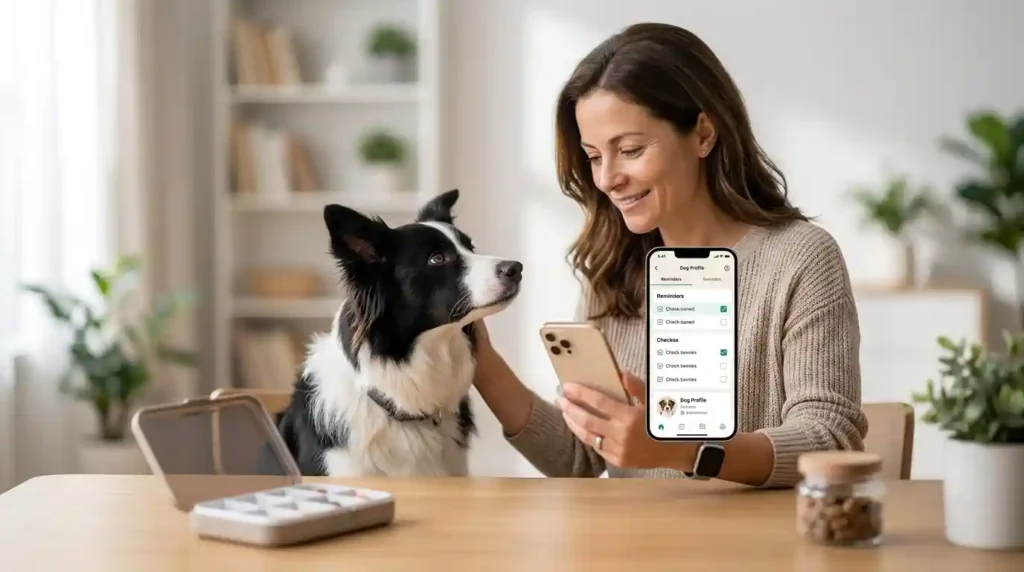
Finding the best medication tracker for pets changed my evenings. I have talked with pet owners in Denver, New York, and many towns in between. Almost all of them ask the same thing at 8:00 p.m.: “Did I already give the pill?” A good tracker answers that in two seconds. In this guide, I will share what I look for, what I skip, and how to stay safe.
What Is a Medication Tracker for Pets?
A pet medication tracker records what your pet takes, when, and how much. It can be an app. It can also be a paper chart on the fridge. Both work if you use them.
Here is the key idea. A tracker records your vet’s plan. It does not pick the medicine. It does not set the dose. Your vet does that. I keep this rule in mind every time I test a new app.
What Can a Pet Medication Tracker Record?
Most trackers let you save these details:
- Pet name
- Medication name
- Medication strength
- Dose instructions
- Administration time
- Frequency
- Start date and end date
- Refill date
- Notes
- Missed doses
- Side effects or things you noticed
The more complete the record, the easier your next vet visit gets. Some pets take several medicines. A full record keeps them straight.
Medication Tracker vs Medication Reminder
These two tools sound alike. They do different jobs.
A reminder tells you when a dose is due. Think of it as an alarm. A tracker records whether you gave the dose. It builds a history. It may also hold medicine names, strengths, and notes.
Why This Difference Matters
A reminder tells you what should happen. A tracker tells you what did happen. That gap causes many mistakes.
The alarm rings. You are busy. You say “later.” Then later never comes. Or worse, someone else gives the dose while you are still planning to. The best tools do both jobs. They remind you, then ask you to confirm.
Why Use a Medication Tracker for Pets?
A busy home can turn a simple schedule into a daily puzzle. Kids leave for school. One person walks the dog. Another feeds the cat. Who gave the pill? A tracker gives one clear answer.
The American Animal Hospital Association (AAHA) suggests steady schedules for some preventive medicines. It also suggests reminders for monthly doses. That tells me simple reminders help real pets.
Preventing Forgotten Doses
Alerts do the heavy lifting here. Look for these:
- Phone alerts
- Push notifications
- Repeat reminders
- Confirmation buttons
- Dose history
I like repeat reminders best. One buzz is easy to swipe away. A second buzz ten minutes later is harder to ignore.
Preventing Accidental Double Doses
Double doses often happen in shared homes. Two people each think the pet still needs the pill. A tracker shows the last recorded dose. Everyone can check before they give anything.
This matters even more when a pet takes several medicines. For more on safe habits, read these pet medication safety tips.
Managing Long-Term Medication
Some pets need medicine for months or years. Common examples include:
- Chronic conditions
- Pain
- Heart disease
- Diabetes
- Allergies
- Seizure disorders
AAHA notes that pets on long-term medicine may need ongoing checks. These can include bloodwork, urine tests, blood pressure checks, or physical exams. It depends on the drug and the condition. A tracker can hold those dates too. It fits well with regular preventive veterinary care.
Keeping a Medication History
A medication history helps in many moments:
- Visiting a new vet
- Going to an emergency clinic
- Traveling
- Using more than one medicine
- Talking about side effects
Vets often ask, “What is your pet taking right now?” It is a simple question. It is hard to answer from memory at a stressful moment. A saved list solves that. It also helps you understand veterinary prescription basics, because you see each medicine in one place.
What Makes the Best Medication Tracker for Pets?
The best medication tracker for pets makes daily care easier. It should not feel like another chore. Here is what I check first.
Easy Medication Scheduling
Look for these schedule options:
- Once daily
- Twice daily
- Weekly
- Monthly
- Custom intervals
- Start and stop dates
Some medicines run on odd schedules. Every other day is one example. Always follow the label your vet gave you.
Dose Confirmation
Useful status buttons include:
- Given
- Skipped
- Missed
- Snoozed
- Not applicable
One tap should be enough. If it takes more, you will skip the log on a rushed morning. Then the history has holes.
Clear Medication Details
The app should let you save:
- Medication name
- Strength
- Dose
- Form, such as tablet, liquid, or chew
- Instructions
- Reason for treatment
Copy these from the label. Strength matters. One tablet can come in more than one strength. You may see a veterinary dosage calculator online. Treat it as a way to prepare questions for your vet. Your vet sets the dose. If you want to compare tools, see these online veterinary calculators reviewed.
Refill Reminders
A good tracker can warn you with messages like these:
- “Only five doses left.”
- “Refill due soon.”
- “Prescription may be running out.”
A pet that runs out of medicine misses doses. Call the clinic early. Some prescriptions take a few days to fill.
Multi-Pet Support
This matters most in these homes:
- Two or more dogs
- A cat and a dog
- Foster homes
- Rescue groups
- Homes where each pet takes different medicine
Look for a separate profile for each pet. Color labels or photos help too. They stop you from logging Luna’s pill under Milo.
Simple Interface
Here is my test. Can a tired person use it at 7 a.m. while the cat screams for breakfast? If not, the design needs work.
Pet Medication Tracker Features to Compare
Feature lists can feel endless. I sort them into three groups. This keeps me from getting distracted by shiny extras.
Essential Features
These are the basics:
- Medication reminders
- Dose logging
- Medication history
- Custom schedules
- Multiple pets
- Notification controls
If an app lacks two or more of these, I move on.
Useful Extra Features
These add comfort and convenience:
- Refill reminders
- Vet contact information
- Prescription photo storage
- Notes
- Side-effect tracking
- Weight tracking
- Appointment reminders
- Vaccination records
Weight tracking is a good one. It helps you spot slow changes. A healthy weight calculator for dogs can give you a rough target to discuss with your vet.
Advanced Features
These are helpful for pets with complex needs:
- Veterinary communication
- Health dashboards
- Wearable integration
- Glucose monitoring
- Remote monitoring
- Caregiver sharing
- Exportable health records
AAHA’s diabetes resources include home-monitoring tools and mobile apps. Owners use them to track how a diabetic pet responds to treatment. Advanced tools can be great. Just remember that most owners do not need all of them.
Pet Medication Tracker Comparison Table
Do not judge an app by the size of its feature list. For most owners, reliable reminders and a clear dose history matter more than a dashboard full of graphs.
| Feature | Basic Tracker | Advanced Pet App | Veterinary-Linked Tool |
|---|---|---|---|
| Medication reminders | Yes | Yes | Yes |
| Dose history | Usually | Yes | Yes |
| Multiple pets | Sometimes | Usually | Usually |
| Refill alerts | Sometimes | Yes | Yes |
| Health notes | Basic | Yes | Yes |
| Vet communication | No | Sometimes | Often |
| Remote monitoring | No | Sometimes | Possible |
| Medical records | No | Sometimes | Often |
| Best for | Simple schedules | Active pet care | Ongoing clinical care |
Use the table as a starting point. Then ask yourself one question: “What problem am I trying to fix?”
Best Medication Tracker for Pets by Use Case
I will not crown one universal winner. That would be misleading. The right tool depends on your pet and your home. Match the tool to your real problem.
Best for Simple Medication Reminders
Look for:
- Fast setup
- Reliable notifications
- Easy “given” confirmation
- Minimal screens
If your pet takes one pill a day, keep it simple. A plain app often beats a fancy one.
Best for Multiple Pets
Prioritize:
- Separate pet profiles
- Different medication schedules
- Color or photo identification
- Shared caregiver access
Test this before you commit. Add two pets and two medicines. Then see how clear the daily list looks.
Best for Chronic Conditions
Look for:
- Medication history
- Symptom notes
- Weight
- Vital signs
- Vet communication
Chronic care creates a lot of data. A tool that organizes it well saves time at every recheck.
Best for Diabetic Pets
Prioritize:
- Medication tracking
- Glucose records
- Food tracking
- Home monitoring
- Veterinary data sharing
AAHA’s diabetes resources point to mobile tools for home monitoring. These can help you and your vet see patterns.
Best for Senior Pets
Useful features include:
- Medication reminders
- Appointment tracking
- Weight records
- Symptom notes
- Support for multiple medicines
- Caregiver sharing
Older pets often take more than one medicine. They also need more checkups. Learn what to expect in these veterinary screening basics.
Best for Foster or Rescue Pets
Look for:
- Multiple animal profiles
- Shared access
- Medical history
- Medication notes
- Easy record transfer
Records must travel with the animal to a new home. Weight matters too. See this guide on weight tracking for rescue animals.
Medication Tracker vs Pet Health App
Not every pet health app is a true medication tracker. Some do many things but do reminders poorly. Here is how I sort them.
Medication Tracker
A true medication tracker is best for:
- Dose reminders
- Administration history
- Medication schedules
It does a small job well.
Pet Health App
A pet health app may include:
- Medication
- Vaccines
- Weight
- Diet
- Appointments
- Medical records
- Activity
These apps cover a lot. Read more in this guide to pet health monitoring apps.
Veterinary Communication App
This type may add:
- Messaging
- Prescription refills
- Appointment requests
- Test results
- Photos
- Telehealth
AAHA has documented how vet apps can handle appointment requests, refill messages, and automated notifications. These tools connect you with the clinic directly.
Should a Pet Medication Tracker Include Vet Communication?
For long-term treatment, it can be a big plus. You share information faster. Your vet sees what happens at home.
If your clinic has no app, that is fine. Many great vets work by phone and email. A good vet relationship matters more than any software. See choosing the right veterinarian for tips.
Why Communication Matters
It helps with:
- Medication changes
- Refill requests
- Side-effect questions
- Follow-up appointments
- Sharing home observations
Small questions get answered before they turn into big problems.
What a Good Vet-Linked App Can Do
It can:
- Send messages
- Share records
- Request refills
- Send reminders
- Upload photos
- Share monitoring data
A photo of a skin reaction, for example, can say more than a long text.
What It Should Not Do
A safe app should never:
- Prescribe medication on its own
- Tell owners to change a dose without veterinary direction
- Replace emergency veterinary care
AAHA’s remote-monitoring guidance says home data can help vet teams spot warning signs and manage chronic conditions. But it stays part of veterinary care. It does not replace it.
How to Choose a Safe Medication Tracker for Pets
A good tracker protects your records as well as organizes them. Here is how I check.
Check Who Developed the App
Look for:
- Veterinary organizations
- Established veterinary practices
- Recognized pet-health companies
- Named clinical advisors
An app with no named team behind it makes me cautious. I want to know who built it.
Check Data and Privacy Controls
Consider:
- Account security
- Data sharing rules
- Export options
- Who can see the records
- Whether you can add caregivers
Read the privacy page. It takes two minutes. It tells you how your data is used.
Check Notification Reliability
Test each of these:
- Morning reminder
- Evening reminder
- Refill reminder
- Snooze
- Confirmation
Phones can block alerts to save battery. Check your phone settings after you install the app.
Check Whether Records Can Be Exported
Export matters when you:
- Change vets
- Visit an emergency clinic
- Travel
- Move
- Share records with another caregiver
If you cannot get your data out, you may lose years of history one day.
How to Set Up a Pet Medication Tracker
Setup takes about ten minutes. Do it once, and do it well. Here are the steps I follow.
Step 1: Create the Pet Profile
Add:
- Name
- Species
- Breed
- Age
- Weight, where it applies
Add a photo if the app allows it. It helps in multi-pet homes.
Step 2: Add Each Medication
Type exactly what the label says:
- Name
- Strength
- Form
- Instructions
Do not guess. If a label is unclear, call the clinic. Also keep the bottles safe. Here is a guide on storing veterinary medicine safely.
Step 3: Add the Schedule
Enter:
- Time
- Frequency
- Start date
- End date
Pick times you can keep. A 6:30 a.m. reminder is useless if you wake at 7:30.
Step 4: Add Refill Information
Record:
- Quantity
- Refill date
- Pharmacy or clinic contact
Set the refill alert a week ahead. That gives you room for delays.
Step 5: Add Caregivers
If more than one person helps:
- Share access where the app allows it.
- Decide who confirms doses.
- Avoid duplicate entries.
One clear rule works best. For example: “Whoever gives the dose taps Given right away.”
Step 6: Test the Reminder
Run one test notification. Do it before you trust the app with an important schedule. Check the sound. Check the lock screen. Check the snooze button.
Real-Life Example: Tracking a Dog’s Medication
Stories stick better than lists. Here is a made-up example that looks like many homes I know.
Tuesday Evening in a Busy Home
Picture a Labrador named Max. Max takes more than one medicine. One family member leaves for work early. Another handles evening care.
Dinner is on the stove. The phone buzzes next to a coffee mug. Max waits by the counter with his tail sweeping the floor.
The Tracker Shows “Given”
The evening caregiver opens the app before touching the pill organizer. The history shows the dose was already given ten minutes ago. A teenager gave it after school and tapped “Given.”
No second dose happens by mistake. The event is on record. Everyone stays calm.
A Week Later
The owner opens the history before a vet visit. Now the owner can explain:
- Which doses were given
- Which were missed
- When the schedule started
- Any changes noticed
The vet gets facts instead of guesses. That makes the visit more useful.
The Small Details That Make It Work
It is the little things:
- The phone buzzing beside a coffee mug
- The dog waiting near the kitchen
- The pill organizer clicking shut
- One quick “Given” tap before going back to dinner
I always tell myself the same thing after that tap. “Bhalo, one less thing to remember.” Bhalo means “good” in Bengali.
Can Medication Trackers Help Prevent Missed Doses?
They help with organization. They cannot guarantee that a dose is given. I want to be honest about that.
Reminder vs Actual Administration
A notification proves only that an alert was sent. You still need to give the medicine. You still need to confirm it. The app cannot do that part for you.
Shared Household Problems
Shared homes create their own problems:
- Two people may each think the other gave the dose.
- One person may tap “Given” by mistake.
- Someone may forget to log a dose that was given.
Shared tracking reduces this confusion. It does not remove it. Talk with your household about the rules.
Missed Dose Records
A useful tracker lets you record:
- Missed
- Skipped
- Delayed
- Given late
Do not “make up” a missed dose on your own. What to do next depends on the medicine and your vet’s instructions. AAHA’s feline diabetes guidance recommends that vets discuss missed doses with clients ahead of time. That shows the right answer depends on the treatment plan. Ask your vet before you need the answer.
Medication Tracker Features for Chronic Pet Conditions
Chronic conditions need more than pill reminders. This section covers what to track for common conditions. It also helps with long-tail searches like “medication tracking app for pets with diabetes.” Always follow your vet’s plan for what to record.
Diabetes
Useful items to track:
- Medication
- Glucose readings
- Food
- Appetite
- Home monitoring
- Vet communication
Timing matters with diabetes. Your vet will tell you how food and doses fit together. Record what happens. Do not adjust anything on your own.
Heart Disease
Useful items to track:
- Medication schedule
- Resting respiratory rate
- Weight
- Symptoms
- Veterinary follow-up
AAHA describes remote monitoring as a way to track trends. It can help spot warning signs in chronic conditions such as heart disease and diabetes. Ask your vet how to count breaths and when to call.
Seizure Disorders
Useful items to track:
- Medication schedule
- Seizure date and time
- Duration
- Notes
- Veterinary review
A clear seizure log helps your vet judge how well treatment works. Missing a dose can matter here, so accurate records are key.
Arthritis and Chronic Pain
Useful items to track:
- Medication
- Mobility
- Appetite
- Activity
- Comfort observations
Add a weight note too. A pet body condition score helps you see whether extra weight adds stress to sore joints.
Allergies
Useful items to track:
- Medication
- Symptoms
- Skin observations
- Trigger notes
- Treatment response
Photos help a lot with skin issues. Note dates so your vet can look for seasonal patterns.
Medication Tracker vs Paper Calendar
Not everyone needs an app. I have seen paper charts work beautifully. The “best” system is the one you will use every day. A simple paper chart that gets checked beats a brilliant app that gets ignored after Tuesday.
| Method | Advantages | Limitations | Best For |
|---|---|---|---|
| Phone app | Alerts and history | Requires setup | Most owners |
| Shared digital calendar | Easy sharing | Limited pet details | Families |
| Paper chart | Simple, no battery | No automatic alert | Simple schedules |
| Spreadsheet | Flexible | Manual work | Organized caregivers |
| Vet-linked platform | Records and communication | May need clinic support | Chronic care |
Some people mix methods. A paper chart by the pill shelf plus a phone alarm is a fine combo.
Common Pet Medication Tracking Mistakes
I have made a few of these myself. Here is what to watch for.
Setting the Wrong Time
Watch for:
- AM and PM mix-ups
- Time zone changes during travel
- Daylight saving changes
Check your reminders after every trip and every clock change.
Recording the Wrong Medication
This happens with:
- Similar-looking bottles
- Multiple prescriptions
- Different strengths
Read the label each time you add or change an entry.
Forgetting to Mark a Dose
The pattern looks like this. The reminder goes off. You give the medicine. You never tap “Given.” Later, no one knows what happened. Tap right away, before you put the pill bottle down.
Letting Two Caregivers Track Separately
Two logs create duplicate or missing records. Use one shared system whenever you can.
Ignoring Refill Dates
A reminder system only works if the medicine is on hand. Call in refills early. Do not wait for the last pill.
Treating an App as a Veterinary Decision Tool
A tracker records care. It does not diagnose illness. It does not adjust treatment. Learn how these tools differ from an exam in this guide to health calculators vs veterinary assessment.
What Should a Pet Medication Tracker Record?
Use this checklist when you set up any tracker. It also works for a paper chart.
Medication Information
- Medication name
- Strength
- Form
- Prescribing veterinarian
- Reason for treatment
Schedule Information
- Dose instructions
- Time
- Frequency
- Start date
- End date
Tracking Information
- Given
- Missed
- Skipped
- Delayed
- Notes
Health Information
- Symptoms
- Side effects
- Appetite
- Weight
- Relevant home readings
Cat owners can add weight trends here too. A cat weight calculator can help you talk about a healthy range with your vet.
Contact Information
- Veterinary clinic
- Emergency clinic
- Pharmacy
- Caregiver
Keep the emergency clinic number where you can find it fast.
USA Veterinary Expert Advice on Medication Tracking
Apps are useful. Veterinary guidance is more useful. I prefer to lean on current guidance rather than app marketing. Here is what a US veterinary specialist has said.
Audrey Cook, BVM&S, MSc Vet Ed, FRCVS, Dip ACVIM, Dip ECVIM, Dip ABVP
Audrey Cook is a veterinary specialist and professor at Texas A&M University College of Veterinary Medicine. AAHA interviewed her in 2026 about monitoring pets on chronic medications. She explained that monitoring advice can depend on the drug, the patient, the mix of medicines, and clinical judgment.
Expert Quote From Audrey Cook
AAHA quoted her this way:
“There is still much that is left to individual practitioner discretion.”
What This Means for Medication Apps
Here is how I read that:
- An app can organize information.
- A vet decides what monitoring is right.
- Different drugs may need different checks.
- Some pets need bloodwork, urine tests, blood pressure checks, or physical exams.
A tracker should make those plans easier to follow. It should never replace them.
How Medication Trackers Can Help Veterinary Visits
A good medication history makes the appointment more productive. You spend less time guessing and more time solving problems.
Bring the Medication List
Include:
- Current medications
- Strength
- Frequency
- Supplements
- Recent changes
Do not forget supplements. They can matter to your vet.
Show the Administration History
This is useful for:
- Missed doses
- Delayed doses
- Treatment changes
- Side effects
If a medicine seems to “stop working,” the history may show why. Maybe doses were late. Maybe the schedule changed.
Share Home Monitoring Data
Depending on the condition, share:
- Weight
- Glucose
- Respiratory rate
- Symptoms
- Appetite
- Activity
AAHA notes that home-monitoring data can help vet teams understand how a pet responds to treatment. It supports their decisions. It does not make them for the vet.
When a Medication Tracker Is Not Enough
An app is a helper. It is not a doctor. Some moments need a phone call, not a notification.
Possible Medication Side Effects
Contact your veterinarian. Do not use the notes section as a substitute for medical advice. The US Food and Drug Administration (FDA) says that if you think your pet has a medicine side effect, call your vet promptly. Log the details after you make the call.
Suspected Overdose
Get veterinary guidance right away. Do not wait for the next app notification. Keep the medicine bottle handy so you can read the label to the vet.
Serious or Sudden Symptoms
Emergency care may be needed. Do not rely on home tracking alone. If something looks wrong, trust your gut and call.
Medication Changes
Record the change after you get veterinary instructions. Do not change treatment just because an app suggests a new schedule.
Best Pet Medication Tracker Review Checklist
Use this scorecard when you test any app. It works better than counting features. A tracker with 20 buttons may still frustrate you if logging one dose takes five taps and three menus.
| Evaluation Area | What to Look For |
|---|---|
| Reminders | Reliable, customizable alerts |
| Dose history | Clear administration log |
| Multi-pet support | Separate profiles |
| Multiple medications | Easy schedule management |
| Refill alerts | Quantity and date reminders |
| Vet communication | Messaging or record sharing |
| Health tracking | Weight, symptoms, vitals |
| Caregiver access | Shared household support |
| Data export | Easy record transfer |
| Safety | Clear clinical boundaries |
| Usability | Fast, simple daily entry |
| Privacy | Clear data policies |
Try each app for a week before you decide. Real life shows flaws faster than a feature page does.
FAQs About the Best Medication Tracker for Pets
What is the best medication tracker for pets?
The best choice depends on your situation. Think about how many pets you have, how often they take medicine, and whether they have a chronic condition. Also consider caregiver sharing and vet features. The best tracker is one you will open every day.
Is there an app that reminds me to give my pet medicine?
Yes. Many pet health and medication apps send scheduled reminders. Some vet practice apps also send prescription and refill reminders. Test the alerts first to make sure they arrive on time.
Can a medication tracker handle multiple pets?
Many advanced trackers can. Look for separate pet profiles and separate schedules for each pet. Photos or colors make daily use much easier.
Can I track missed doses?
A good tracker lets you mark doses as given, missed, skipped, or delayed. That record helps your vet. Do not double up after a missed dose unless your vet tells you to.
Should I track my pet’s side effects?
Yes. Notes about symptoms and changes give your vet useful information. But call your vet promptly about any concerning reaction. Do not wait for the next appointment.
Can a pet medication app tell me when to change the dose?
No, it should not. Treatment changes must come from your prescribing veterinary team. An app should only record the change once your vet approves it.
Are pet medication trackers worth using?
They can be very helpful. They shine when a pet takes several medicines, needs long-term treatment, has more than one caregiver, or needs regular monitoring. For a single short course, a simple alarm may be enough.
Final Recommendation
After all my research and years of talking with pet owners, my advice is simple. Choose the best medication tracker for pets by looking at your daily life first. Then look at the feature list.
For most homes, three things matter most. You need reliable reminders. You need a clear dose history. You need easy sharing with everyone who helps. If your pet has a chronic condition, add vet communication and health tracking to the list.
Keep the safety line clear. A tracker records your vet’s plan. It does not replace it. When in doubt, call your veterinarian.
If you like using tools, learn what each one can and cannot do. This veterinary calculator guide is a good place to start. Then pick one tracker, set it up today, and test the reminder tonight. Your future self, standing in the kitchen at 8:00 p.m., will thank you.

Shakitul Alam is the Chief Executive Officer and Founder of Pet Calculator. He holds a degree in Computer Science and Information Technology from the University of Texas at Dallas, combining advanced algorithmic engineering with a lifelong passion for animal welfare and pet health care.
As a recognized pet care technology expert, Shakitul has spent years researching and developing responsive, vet-approved digital tools that make pet wellness data accessible to millions of dog and cat owners nationwide. Under his leadership, Pet Calculator adheres to the highest standards by pairing precise mathematical modeling with published veterinary science.