
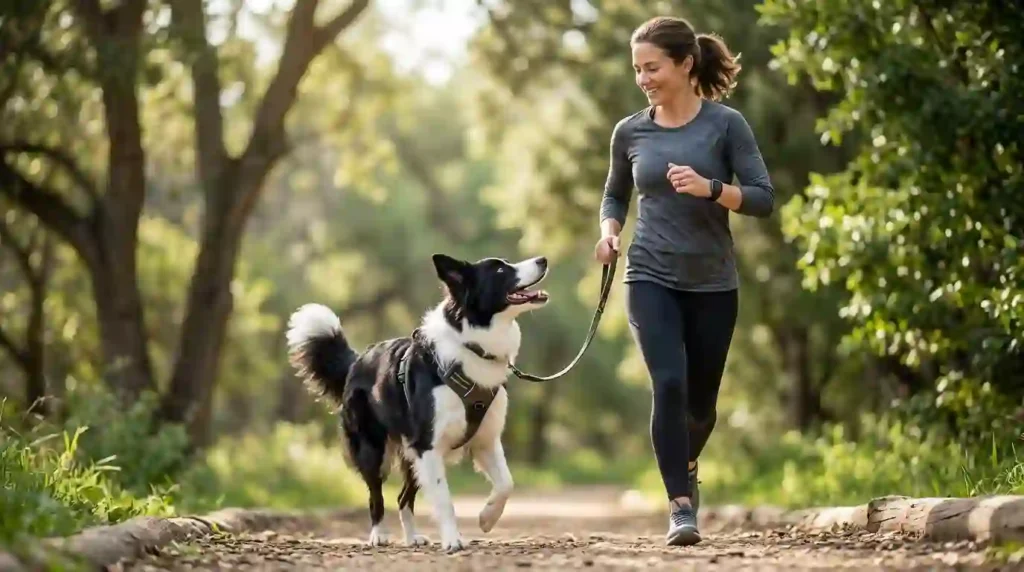
Saturday morning in Denver, I stood at the door with a leash in my hand. My dog bounced like a spring. I wondered if a 20-minute walk was enough. That question sent me looking for the best dog exercise calculator. Here is what I learned, and how you can use it.
Owners search for these tools because we want to get it right. But fixed advice often fails. A Chihuahua and a Border Collie are not built the same. A puppy is not a senior dog. An overweight dog may need controlled activity. A flat-faced dog may need a different plan. This guide helps you estimate daily activity, walking time, and intensity. It also covers weight-loss activity and fitness progress. One rule comes first: treat every result as an estimate, then adjust it to your dog.
What Is a Dog Exercise Calculator?
A dog exercise calculator uses facts about your dog to estimate how much activity may fit. It can also suggest what type. The useful ones do more than take an age and print a random number. They work like a planning helper.
What can a dog exercise calculator estimate?
Most tools estimate daily activity needs and exercise time. Some set walking goals or activity levels. Others guess calorie use, weight-management activity, or fitness progress. A few suggest how often to exercise. A good tool shows a range, not a promise.
What information might it ask for?
Expect questions on age, breed, and weight. Many also ask about body condition, activity level, and health. Some want your dog’s fitness level and the type of exercise. Your answers shape the result. In my experience, owners guess here more than they should. Take a minute to weigh your dog.
Dog exercise calculator vs dog activity tracker
A calculator estimates a target. An activity tracker records real movement. They do different jobs, and the best routine uses both. VCA notes that pet monitoring devices can record activity and help owners spot changes over time. You can learn more in our guide to a pet health monitoring app.
What Makes the Best Dog Exercise Calculator?
A good tool does not treat your dog like a four-legged stopwatch. It looks at the things that truly change exercise needs. Here are the big ones.
Age and life stage
AAHA splits canine life into four broad stages: puppy, young adult, mature adult, and senior. Health needs change at each stage. So should exercise. A calculator that ignores life stage will miss the mark. If you are unsure where your dog fits, try our dog age calculator.
Breed and body structure
Size and build matter. Small breeds tire in different ways than large or giant breeds. Working and sporting breeds often need more activity. Flat-faced breeds can struggle to breathe in heat or hard effort. A good tool asks about breed or size, and it flags special cases.
Current fitness
A couch-loving dog should not get an athlete’s workout. Fitness builds slowly. A useful calculator asks what your dog does now. Then it builds from there.
Body condition and weight
Two dogs can weigh the same and look very different. One may be lean and muscular. The other may carry extra fat. Underweight, ideal, overweight, and obese dogs need different plans. Learn how vets judge this in our dog body condition score guide.
Health status
A calculator should nudge you toward your vet. This matters most with joint disease, heart disease, or breathing problems. It also matters after surgery or injury, and with arthritis or other long-term conditions. No online tool can see what your vet sees.
Activity type and intensity
A slow sniffing walk is not the same as running. Hiking, swimming, fetch, agility, and cycling each ask something different of the body. Good tools separate these. Weak tools count all minutes the same.
What Should a Dog Exercise Calculator Measure?
This is where a tool shows its real value. Here is what I look for.
Exercise duration
Look for minutes per session, total daily minutes, and weekly activity. Three views give a fuller picture than one number.
Exercise frequency
Should your dog go out once a day or several times? Some dogs do better with short sessions spread out. Rest days can help too. A good tool says so.
Exercise intensity
Intensity runs from gentle to moderate to vigorous. Sport and working levels sit above that. Ten minutes of hard running is not ten minutes of easy walking. The tool should tell them apart.
Distance
Some owners think in miles, not minutes. A tool may track walking, running, or hiking distance. Terrain and pace change what a mile means, so treat distance as a rough guide.
Energy expenditure
Many tools estimate calories burned. These numbers are approximate. Weight, pace, and terrain all change them. Use them to compare activities, not to count exact calories.
Recovery
Recovery is often missing. Yet it may be the most useful part. Watch rest periods, fatigue, and next-day stiffness. A dog who bounces back is doing fine. A dog who limps the next morning did too much.
Best Dog Exercise Calculator Types by Need
“Best” depends on your goal. I would not trust any list that ranks tools for every dog. Match the tool to your situation instead.
Best for everyday walks
Keep it simple. Look for age, breed or size, and activity level. It should also give a walking time and a plan to build slowly. For a healthy adult dog, this is often enough.
Best for overweight dogs
Prioritize body condition and weight trends. Look for low-impact activity, slow increases, and links to nutrition. VCA advises talking with your vet before raising activity, especially if your dog has limited mobility or other health concerns.
Best for puppies
Look for life stage and growth status. Short play periods and joint safety matter most. VCA cautions that growing puppies can suffer bone and joint trauma from long runs. It suggests short, self-paced play instead of hard exercise.
Best for senior dogs
Choose a tool built around low-impact activity, mobility, and joint health. It should allow shorter sessions and plenty of recovery. Older dogs often do best with gentle, steady movement.
Best for working or sporting dogs
These dogs need a tool that covers conditioning, endurance, and intensity. Recovery and job demands matter too. AAHA’s guidance for working, assistance, and therapy dogs stresses individual care, fitness, nutrition, and muscle and joint health.
Dog Exercise Calculator Comparison Table
A tool with ten flashy settings is not always better. A simple one with good vet sources can beat it. The right choice depends on your goal. For everyday walks, simple may be enough. For weight loss or health concerns, more personal detail matters more.
| Feature | Basic Calculator | Advanced Calculator | Veterinary-Focused Tool |
|---|---|---|---|
| Age | Yes | Yes | Yes |
| Breed/size | Sometimes | Yes | Yes |
| Weight | Yes | Yes | Yes |
| Activity level | Yes | Yes | Yes |
| Body condition | Rare | Often | Preferable |
| Health factors | Rare | Sometimes | Stronger |
| Intensity | Limited | Yes | Yes |
| Progress tracking | Rare | Often | Useful |
| Veterinary guidance | Rare | Varies | Stronger |
| Safety warnings | Basic | Better | Essential |
How Does a Dog Exercise Calculator Work?
The math is often simple. The hard part is reading the result wisely. Here is the process I follow.
Step 1: Enter your dog’s details
Add age, breed, weight, and activity level. Include health status and fitness level. Be honest. A rosy answer gives a rosy, and possibly unsafe, result.
Step 2: Select the activity
Pick what you plan to do. Walking, running, fetch, swimming, hiking, play, and agility all count. Each has a different effect on the body.
Step 3: Choose duration or intensity
Set minutes, distance, pace, or how often you go. Start on the low side. You can always add more later.
Step 4: Review the estimate
Check the units and the tool’s assumptions. Look at the intensity it used. Then ask one question: does this fit my dog today?
Step 5: Monitor your dog
Watch how your dog moves. Comfortable movement and normal recovery are good signs. Excess tiredness, limping, or stiffness are not. The dog always outranks the number.
How Much Exercise Does a Dog Need?
There is no single number for all dogs. Needs shift with age, breed, body condition, health, and fitness. VCA says the same. Here is how it looks by group.
Puppies
Puppies need short play sessions. Keep movement fitting for their age. Avoid long, repeated, high-impact effort. Let them rest often. Their bones are still growing.
Adult dogs
Most healthy adults need daily movement. That can mean walks, play, and mental work. Breed matters too. A retriever and a Pug will not want the same day.
Senior dogs
Older dogs often do best with lower-impact movement. Shorter, more frequent sessions can help. Watch how they get up and how they walk. Our guide on when pets become seniors explains what to expect.
High-energy breeds
These dogs need more physical work. They also need brain work. Structured exercise and slow conditioning help them stay fit and calm. A long walk alone may not be enough.
Low-energy or small dogs
They still need regular movement. Indoor play and short walks count. Do not skip exercise just because your dog seems fine on the couch.
Dog Exercise Calculator for Weight Loss
Weight loss is a top reason people search for these tools. It is also where I see the most mistakes. Exercise helps, but it is only one part of the plan.
Why exercise alone is not enough
Food intake matters. Treats matter. Body condition matters. A dog can walk daily and still gain weight if the bowl and treat jar stay too full. Use a healthy weight calculator for dogs and check the ideal weight for adult dogs as a starting reference.
Start slowly
Begin with short walks. Add a few minutes at a time. Avoid sudden high-impact play. Extra weight already stresses joints. A slow start protects them.
Track weight and body condition
Weigh your dog on the same scale at regular times. Check body condition by feel and by sight. Take progress photos. Keep an activity diary. VCA recommends food and activity records and slow increases in activity for overweight pets. If you work with shelter or rescue pets, see our tips on weight tracking for rescue animals.
Exercise options for overweight dogs
Walking is the base. Gentle play adds variety. Controlled swimming can be easier on the joints. Rehab plans and underwater treadmills can help when a professional says they fit.
When weight loss needs veterinary supervision
Call your vet for severe obesity, breathing trouble, or joint pain. Do the same for exercise intolerance or heart disease. These dogs need a medical plan, not just a calculator.
Can a Dog Exercise Calculator Calculate Calories Burned?
Yes, many can. But calorie numbers can create a false sense of precision. Treat them with care.
What calorie estimates can tell you
They show rough energy use. They let you compare activities. They can support general fitness tracking. That is about it.
Why calorie numbers vary
Body weight changes the result. So do pace and terrain. Weather, fitness, and activity type all play a part. Each dog’s metabolism differs, too.
Why calories should not determine feeding on their own
Food energy varies from brand to brand. Exercise estimates vary as well. Your dog’s weight and body condition give the real feedback. To plan meals, use a pet calorie calculator or a veterinary calorie calculator, then adjust to how your dog responds.
Dog Exercise Calculator vs Activity Tracker
These tools answer different questions. Here is a quick view.
| Tool | Main Question | Best Use |
|---|---|---|
| Exercise calculator | How much activity may be appropriate? | Planning |
| Activity tracker | How much did my dog actually move? | Monitoring |
| Veterinary assessment | Is this activity safe? | Clinical guidance |
| Exercise diary | What routine are we following? | Long-term tracking |
Why combining tools can help
Calculate a starting plan. Track real activity. Watch your dog’s response. Then adjust in small steps. Each tool fills a gap the others leave.
What trackers cannot tell you
A tracker cannot tell if your dog is in pain. It cannot say if exercise is medically safe. It will not explain why activity dropped. It cannot confirm that your dog is recovering well. Only you and your vet can judge those.
Best Exercises to Include in a Dog Activity Plan
Variety keeps dogs happy and works different muscles. Here are the options I lean on most.
Walking
Walking is easy to control and easy to measure. It is a great starting point. VCA describes walking as a cornerstone of canine fitness. It needs little gear and helps you, too.
Sniffing walks
Let your dog stop and sniff. It is real exercise for the nose and brain. It also lowers stress. Choose safe places and give your dog time to explore.
Fetch
Many dogs love it. Watch for hard starts and sudden stops. Limit repeats if your dog is at risk of injury.
Swimming
Swimming is low-impact. But it does not suit every dog. Introduce water slowly and stay close.
Hiking
Terrain changes the effort. Heat and hydration matter. Check paws often. Start with easy trails.
Training games
Obedience drills, search games, and hide and seek all count. So do food puzzles. They tire the mind, and a tired mind often means a calmer dog.
Exercise Needs by Dog Life Stage
AAHA’s life-stage framework helps explain why plans change with age. Let’s walk through it.
Puppy exercise
Puppies build coordination through play. Keep it short and fun. Avoid heavy impact.
Young adult exercise
This is the time for conditioning and skill building. Match activities to breed and energy. Build slowly even when your dog seems unstoppable.
Mature adult exercise
Keep fitness steady. Watch weight closely. Notice small changes in how your dog moves.
Senior exercise
Aim for comfort and mobility. Choose low-impact options. Allow more recovery time between outings.
USA Veterinary Expert Advice on Dog Exercise
Real vet guidance separates a useful tool from a gimmick. Here is what the experts say.
Courtney Barnes, BSc, DVM; Malcolm Weir, DVM, MSc, MPH; Robin Downing, DVM, CVPP, CCRP, DAAPM
These veterinary authors wrote VCA guidance on healthy canine exercise. They say a vet exam should come before a new fitness program. Their advice ties activity to age, body condition, health, breed, and fitness. That is the same logic a good calculator should follow.
A practical expert point to quote
The VCA guidance describes walking as a cornerstone of canine fitness. Here is why that makes sense. Walking is easy to control. You can measure it. You can raise it a little at a time. It works for many dogs, but not every dog needs the same pace or length.
Malcolm Weir, DVM, MSc, MPH and Lynn Buzhardt, DVM
Their running guidance adds key points. Get a physical exam before hard exercise. Build fitness slowly. Age and bone maturity matter. Short-muzzled dogs may need special care.
Real-Life Example: Using a Dog Exercise Calculator
Numbers feel dry, so let me make this real. This is a made-up example, but it mirrors what many owners face.
Saturday morning in Austin, Texas
Picture Max, a 5-year-old mixed-breed dog. His owner notices he has gained weight. Yet Max still chases squirrels with Olympic-level joy. The owner enters Max’s age, weight, size, and activity level. Then she adds his current walking routine. The calculator does not suggest a big jump. It suggests a slow rise.
What the owner does next
She starts small and adds time over several weeks. She weighs Max on the same scale. She watches how he recovers and notes any stiffness or limping.
Week one
The walks stay short. Max gets to sniff and stop. The goal is comfort, not speed.
Week three
She adds a few minutes. Max still bounces back at home. She logs his weight and mood in her diary.
Sensory detail
The pavement is warm, so she stays on grass when she can. The leash jingles. Max stops every 20 feet to inspect one extremely important blade of grass. She laughs and keeps the pace easy.
Natural local-language touch
At the end of week three, Max trots home with steady steps. She checks his paws and gait. “Thik ache,” she says with a smile. It means all is well. That is the goal: a happy dog, and a plan that works.
Signs Your Dog May Be Getting Too Much Exercise
Safety comes first. Even a great calculator can miss how your dog feels today.
During exercise
Watch for heavy panting and repeated stopping. Notice if your dog sits or lies down, or falls behind. Any clear distress is a signal to stop. VCA’s behavior guidance says to stop and rest if a dog seems out of breath or keeps trying to sit or lie down.
After exercise
Look for limping and stiffness. Notice if your dog is slow to move or struggles to stand. Odd behavior counts too. So does slow recovery.
When to contact a veterinarian
Call your vet for pain that lasts or trouble breathing. Call for collapse, or if exercise trouble keeps returning. A sudden drop in stamina also deserves a call. Routine preventive veterinary care can catch problems early.
Common Dog Exercise Calculator Mistakes
I have made a few of these myself. Here is what to avoid.
Using age as the only input
Age is just one piece. Breed, weight, and health matter as much.
Ignoring body condition
Same weight does not mean same body. Muscle and fat change the picture.
Jumping into intense exercise
Sudden jumps raise injury risk. Build up bit by bit.
Treating calories as exact
Calorie numbers are guesses. Use them as a loose guide.
Ignoring the weather
Heat and humidity change what is safe. Adjust the plan for the day.
Assuming a tired dog is a healthy dog
Exhaustion is not the goal. A dog who flops after every walk may be doing too much.
Comparing your dog with another dog
Your neighbor’s dog is not yours. Each dog has its own limits.
How to Choose the Best Dog Exercise Calculator
Here is my checklist. It has saved me time.
Check the inputs
Look for age, breed or size, and weight. Activity level, body condition, and health should be there too. More useful inputs usually mean a more useful result.
Check the methodology
Ask if the formula is explained. Ask if sources are listed. See if the tool ties back to vet guidance. If it hides its method, be careful.
Check the output
A good result explains duration, frequency, and intensity. It should also state its limits. If it says “exactly 47 minutes,” walk away.
Check whether it supports gradual progression
The tool should never push a huge jump overnight. Look for small, staged steps.
Check whether it includes safety guidance
Look for warnings on puppies, seniors, and obese dogs. Look for notes on flat-faced breeds and dogs with health issues. For broader tools, see our best pet health calculator guide.
Check mobile usability
You will likely use it at the park. Large input fields help. So do fast loading, clear results, and simple tracking.
Dog Exercise Calculator Review Scorecard
I prefer a clear checklist to a star rating. Use this table to grade any tool.
| Factor | What to Check |
|---|---|
| Veterinary source | Is the source credible? |
| Age | Included? |
| Breed/size | Included? |
| Weight | Included? |
| Body condition | Included? |
| Health status | Considered? |
| Activity intensity | Included? |
| Progression | Included? |
| Safety warnings | Clear? |
| Tracking | Available? |
| Methodology | Explained? |
| Update date | Current? |
How to interpret the scorecard
A simple tool can work for basic planning. A more detailed one may suit weight management better. A dog with health issues needs professional input, whatever the score.
Dog Exercise Calculator for Different Dog Owners
Your life shapes your needs. Here is what to prioritize.
New puppy owner
Focus on age and development. Choose safe play and short activity periods.
Busy adult-dog owner
You need quick daily targets. Walk tracking and reminders help you stay on track.
Senior-dog owner
Look for low-impact activity, mobility support, and recovery time.
Overweight-dog owner
You need weight tracking and slow activity growth. Nutrition and body condition matter here.
Working-dog owner
Prioritize conditioning and endurance. Recovery and job demands come next.
Active dog-sport owner
Look at intensity and training volume. Recovery and injury prevention are key.
How to Build a Dog Exercise Plan From Calculator Results
A result is only a starting point. Here is how I turn it into a plan.
Start with the current baseline
Write down what your dog does now. Include daily walk time, play, and running. Note rest days and current weight.
Set one small change
Add a little time. Do not change length and intensity at once. One change at a time keeps things clear.
Monitor the dog
Track energy, stiffness, and appetite. Track weight, recovery, and willingness to go out. A dog who loves the leash is a good sign.
Adjust based on response
If your dog feels good, progress slowly. If your dog seems tired or sore, cut back and reassess. If symptoms last, see your vet. VCA stresses steady, progressive conditioning. It also notes that steady effort beats one very long weekend workout.
When a Dog Exercise Calculator Is Not Enough
Some dogs need more than a tool. Here are the cases I never leave to a calculator.
Puppies with special concerns
Rapid growth, bone problems, pain, or an odd gait need a vet. Do not guess.
Senior dogs
Arthritis, low stamina, and changes in mobility call for a plan from your vet. Ask about safe options. Consider veterinary screening basics to know what checks may help.
Overweight or obese dogs
Breathing trouble, joint problems, and exercise intolerance need medical input first.
Dogs recovering from surgery or injury
Here, exercise may need to be cut, not raised. VCA notes that rest limits are common after surgery or injury. Follow your vet’s orders exactly.
Dogs with heart or respiratory conditions
Do not rely on a general calculator. Intensity may need medical oversight.
Dog Exercise Safety Checklist
Print this and keep it by the door.
Before exercise
- Check the weather.
- Check the surface heat.
- Bring water.
- Use the right gear.
- Know your dog’s current fitness level.
During exercise
- Watch breathing.
- Watch gait.
- Allow breaks.
- Avoid sudden jumps in intensity.
- Watch for overheating.
After exercise
- Check recovery.
- Look for limping.
- Watch for stiffness.
- Offer water.
- Record anything unusual.
Never use a calculator to
- Diagnose illness.
- Override vet exercise limits.
- Start hard training after surgery.
- Ignore pain.
- Force an unwilling dog to exercise.
FAQs About the Best Dog Exercise Calculator
What is the best dog exercise calculator?
The best one looks at age, breed, weight, activity, fitness, and health. It gives a range, not one target for every dog. It also explains its method and adds safety notes.
Is there a free dog exercise calculator?
Yes, many free tools exist online. Judge them by their inputs, sources, and safety notes. A free tool that cites vet guidance beats a fancy one that does not.
How much exercise does my dog need each day?
It depends. Age, breed, body condition, health, and fitness all play a part. No single number fits every dog. Start with a calculator estimate and adjust to your dog’s response.
Can a dog exercise calculator help with weight loss?
Yes, as a planning and tracking aid. But food, treats, and body condition matter just as much. Ask your vet to review the plan.
Can puppies use dog exercise calculators?
They can, if the tool is age-aware. Puppy plans must respect growing bones. Keep sessions short and play-based.
Are dog exercise calculators accurate?
They give estimates. Accuracy depends on your inputs and the tool’s method. Treat results as a starting point.
Can an activity tracker replace an exercise calculator?
No. One estimates a plan. The other records what happened. Together they work best.
Should I ask my vet before increasing my dog’s exercise?
Yes, especially for puppies, seniors, and overweight or inactive dogs. Dogs with health issues should always get vet guidance first.
Final Recommendation
Here is my honest take. The best dog exercise calculator is a planning aid, not a magic number machine. Pick one that asks about age, breed, weight, body condition, and health. Make sure it explains its method and warns you about safety.
Then follow a simple loop. Get an estimate. Start below it. Track how your dog moves and recovers. Add a little at a time. If anything feels off, call your vet.
For a wider view of pet health tools, read our best pet wellness calculator guide. Your dog will not care about the math. They just want time with you.

Shakitul Alam is the Chief Executive Officer and Founder of Pet Calculator. He holds a degree in Computer Science and Information Technology from the University of Texas at Dallas, combining advanced algorithmic engineering with a lifelong passion for animal welfare and pet health care.
As a recognized pet care technology expert, Shakitul has spent years researching and developing responsive, vet-approved digital tools that make pet wellness data accessible to millions of dog and cat owners nationwide. Under his leadership, Pet Calculator adheres to the highest standards by pairing precise mathematical modeling with published veterinary science.