
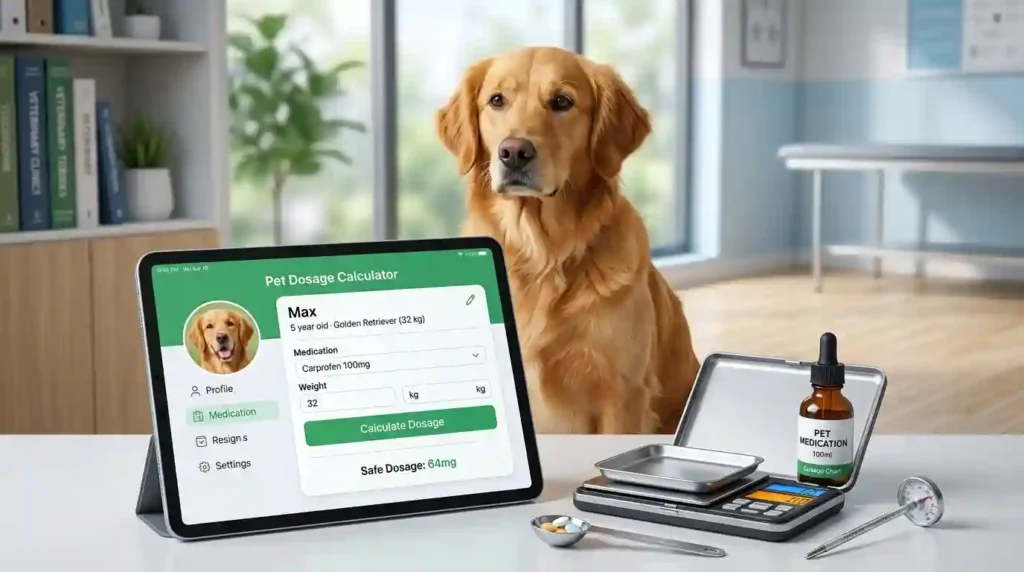
It is 8:30 p.m., and my dog sits by the medicine cabinet. The bottle says 50 mg, and I wonder what the vet really asked me to give. Pet owners in Denver, New York, and every other town type the same thing into a search bar. They want the best pet dosage calculator. I have learned that the best tool is not the one with the most buttons. It has a trusted source, clear inputs, and smart safety limits. This guide shows you how to spot one. It will not teach you to self-prescribe.
What Is a Pet Dosage Calculator?
A pet dosage calculator is a tool that does math for you. It takes facts about an animal and applies a dosing formula or a reference value. Vet teams use these tools all day. Owners can use them in small ways, such as understanding a label they already have. I think of the tool as a ruler. It measures well, but it cannot tell you what to build.
What Information Can a Dosage Calculator Use?
Most tools ask for the same core details. I sort them into two groups to keep things simple.
Details About the Pet
- Animal species
- Body weight
Details About the Medicine
- Drug name
- Drug concentration
- Dose per kg or another unit
- Dosing frequency
- Route of administration
- Formulation
Each field matters. One wrong entry can change the whole result. That is why I read every box twice.
Pet Dosage Calculator vs Veterinary Prescription
Let me draw a clear line here.
- A calculator performs or helps with a calculation.
- A vet prescription comes from a licensed vet. It is based on a diagnosis and a check of the patient.
The U.S. Food and Drug Administration (FDA) explains that prescription animal drugs need a lawful order from a licensed vet. Safe use needs that oversight. So the tool gives you math. The vet gives you the decision. For a plain walk through of how this works, read our guide on veterinary prescription basics.
Why a Calculator Cannot Make the Whole Decision
A dosing plan can change based on many things:
- Age, species, and breed
- Kidney function and liver function
- Pregnancy
- Other medicines
- The diagnosis
- Body condition
- How the pet responds to treatment
The Merck Veterinary Manual notes that drug dosing can need changes based on patient and drug factors. A tool cannot feel a belly, check gums, or read blood work. Only a vet can. I explain this same gap in health calculator vs veterinary assessment.
What Makes the Best Pet Dosage Calculator?
I use six checks on every tool. Together they form my simple framework. Run any calculator through them, and you will learn a lot fast.
A Trusted Veterinary Source
Look for tools tied to:
- Vet organizations
- Vet universities
- Recognized vet references
- Peer-reviewed clinical resources
- Established vet publishers
If I cannot find the source in one minute, I close the tab. A tool without a clear source is just a guess with a nice design.
Clear Drug and Species Selection
A good tool makes it hard to pick the wrong species, drug, formulation, or concentration. Drop-down menus help. So do clear labels. A dog and a cat can react very differently to the same drug. The species box is never a small detail.
Transparent Inputs
The tool should say what it needs and why. Be careful with a tool that gives a precise-looking answer after asking for almost nothing. That is a red flag. Real dosing has many parts, and a good tool shows them.
Clear Units
Look for plain units:
- kg and lb
- mg and mg/kg
- mg/mL and mL
Unit mix-ups are one of the biggest real-world risks. Here is a quick example. A 15 lb dog weighs about 6.8 kg. Type 15 into a kg box, and the tool thinks the dog is more than twice as heavy. Every number after that is off.
Safety Warnings
A quality tool tells you when a vet must review the result. It should not hide this in tiny gray text. I like tools that put the warning right beside the answer.
Updated Information
Check these details:
- Last updated date
- Source references
- Drug information source
- Guideline version
Drug facts change over time. An old tool can carry old advice.
How Pet Dosage Calculators Work
I will explain the process here. I will not turn this into a do-it-yourself dosing manual. The goal is to help you read a result, not to create one.
Weight-Based Calculation
Many drugs have a vet dose written per unit of body weight. The tool takes the pet’s weight and the reference dose. Then it does the math. That is the whole trick. I will not list any dose here. A dose belongs to your vet and your pet.
Concentration Conversion
Liquids add another step. A prescription may list an amount in mg. The bottle lists a strength in mg/mL. The tool turns the amount into a volume in mL.
Here is a made-up example. Say a label lists 100 mg for one dose. The liquid holds 50 mg in each mL. The math is 100 divided by 50, which is 2 mL. These numbers are only for practice. They are not a dose for any pet.
Frequency and Dosing Interval
You will see terms like these:
- Once daily
- Twice daily
- Every 8 hours
- Every 12 hours
Frequency is part of the prescribed plan. Do not invent it from a tool. If the label says every 12 hours, that is the plan until your vet says otherwise.
Route of Administration
The route is how the drug enters the body. It can be:
- Oral
- Topical
- Ophthalmic, which means the eye
- Otic, which means the ear
- Subcutaneous
- Intramuscular
- Intravenous
Merck explains that routes and dosage forms change how drugs are given and absorbed. Ear drops are not eye drops. I do not trust a tool that ignores the route. For a wider look at these tools, see our veterinary calculator guide.
Why Pet Weight Matters in Dosage Calculations
Weight is often the first box a calculator shows. It is also the box people get wrong most often. Here is how I handle it.
Use the Current Weight
Do not use last year’s number from an old vet record. Puppies and kittens change fast. Weight can also drop or rise during illness or treatment. Weigh your pet again, or ask the clinic for the latest number. If you track a young pet’s growth, our best pet growth calculator guide can help you follow the trend.
Pounds vs Kilograms
Most drug references use kilograms. Many US scales show pounds. That gap causes trouble. Before you type, look at the unit beside the box. One pound is about 0.45 kg. So a number in pounds is always bigger than the same weight in kg. Enter the wrong one, and the error is big.
Body Weight Is Not Always the Only Factor
Sometimes a vet looks beyond the number on the scale. They may think about:
- Ideal body weight
- Lean body weight
- Body condition
- Obesity
- Muscle mass
As one example, AAHA guidance on canine hypothyroidism says something useful. For obese patients, dose math may use an estimated lean body weight in that treatment. This is one case. It is not a rule for all drugs. To learn how body fat is scored, read pet body condition score explained.
Best Pet Dosage Calculator Features to Look For
Here is the checklist I keep in my head. I split it into three parts.
Essential Features
- Dog and cat support
- Clear weight units
- Drug and concentration fields
- A clear formula or source
- Vet references
- Mobile-friendly design
- Clear warnings
- An explanation of the result
- Fresh content
A phone-friendly layout matters more than people think. Most of us check labels in the kitchen, not at a desk.
Advanced Features
- Saved pet profiles
- Medication history
- Multiple drug entries
- Interaction information
- Printable results
- Links to vet references
- Calculation history
- Error checking
Error checking is my favorite. A tool that warns you about a strange weight or unit can save real trouble.
Features That Sound Impressive but May Not Matter
A calculator does not become safer because it has twelve colorful buttons. Fancy animations matter less than a reliable source. A clean design is nice, but clinical transparency matters more. I have seen gorgeous tools with no source at all. I have also seen plain ones that showed every step. Guess which one I trust.
Types of Pet Dosage Calculators
Not all tools do the same job. Here is how I break them down.
Dog Dosage Calculators
These tools often offer:
- Weight-based math
- Liquid medicine conversions
- Prescription checking
- Support for vet professionals
Dogs come in many sizes, from tiny to giant. That range makes weight entry very important.
Cat Dosage Calculators
Cats need extra care. Keep these points in mind:
- Species-specific factors matter
- Body weights are small
- Many drugs come as liquids
- Tiny volumes are hard to measure
A cat may weigh only a few pounds. Small errors become big ones. Some drugs that are fine for dogs are not safe for cats. Never swap tools between species.
Veterinary Liquid Dosage Calculators
These tools focus on:
- mg
- mg/mL
- mL
- Measuring syringes
The FDA stresses reading the medicine label with care. It also notes that some liquid medicines need shaking before use. A calculator cannot see that note on your bottle. You must read it. Store the bottle well too. Our guide on storing veterinary medicine safely covers that.
Veterinary Emergency Drug Calculators
Professional emergency tools help teams work out drug amounts fast during care. The Merck Veterinary Manual offers an Emergency Drugs Calculator as a clinical tool. It is built for trained staff. It is not a home tool. If your pet is in trouble at home, call a clinic. You can also read about emergency situations that need immediate veterinary care.
Veterinary Infusion and Constant-Rate Calculators
Some professional tools support:
- Infusion math
- Drug volume
- Delivery rates
Merck provides a Constant Rate Infusions Calculator in its clinical resources. Again, this is a tool for vet teams who watch the patient closely.
Veterinary Dosage Calculator Comparison Table
A useful comparison should focus on purpose and safety. It should not just crown one tool as number one. Merck and AAHA both offer professional vet tools, but their tools cover different clinical jobs.
| Calculator Type | Main Use | Typical User | Key Feature |
|---|---|---|---|
| Basic dosage calculator | Arithmetic support | Owner or vet | Simple inputs |
| Liquid dosage calculator | Volume conversion | Owner or vet | mg-to-mL support |
| Emergency drug calculator | Emergency calculations | Veterinary team | Rapid clinical use |
| Infusion calculator | Rate and volume math | Veterinary team | IV and CRI support |
| Nutrition calculator | Energy needs | Vet or owner | Calorie planning |
| Drug reference tool | Dosing information | Veterinary professional | Drug-specific source |
No single type is best for every job. The right tool depends on the calculation and the user. To see real tools tested side by side, read online veterinary calculators reviewed. For food math, see our pick for the most accurate calorie calculator for pets.
Are Online Pet Dosage Calculators Accurate?
This is the question I hear most often. The honest answer has layers.
The Math Can Be Correct but the Result Still Be Wrong
A tool can add and divide with no flaw. The answer can still be wrong for your pet. Common causes include:
- Wrong weight
- Wrong concentration
- Wrong drug
- Wrong species
- Wrong unit
- An outdated reference
- The wrong frequency
Good math on bad input gives a bad answer.
A Precise Number Is Not Proof of Accuracy
Three ideas often get mixed up. Math precision means the arithmetic is neat. Clinical accuracy means the number fits the medical need. Patient fit means the plan suits this one animal.
A tool may show 3.27 mL. That looks very sure of itself. But the digits do not prove that 3.27 mL is right for the animal. A neat number is not the same as a right dose.
Veterinary Dosing Is Individualized
Merck’s pharmacology guidance states, “A dosing regimen should be individualized for each patient.” I lean on this line more than any other. It sums up why no online tool can replace a vet.
Check the Source Behind the Number
Ask these questions:
- Where did the dose come from?
- Is the drug approved for this species?
- Is the tool current?
- Does it cite vet literature?
- Does it explain its limits?
If the answers are unclear, do not use the result.
Best Veterinary Calculator Sources to Consider
I will not invent a ranking. Instead, I compare trusted sources by what they do.
Merck Veterinary Manual Clinical Calculators
Merck’s vet platform pairs clinical calculators with reference text and tables. Its professional app also has calculators and content from more than 400 vet experts in 20 plus countries. Good examples include:
- Calories Calculator
- Emergency Drugs Calculator
- Constant Rate Infusions Calculator
- Glucose Curve Calculator
The calorie tool ties into feeding plans. For owner-friendly food math, see the best veterinary calorie calculator options.
AAHA Veterinary Tools
The American Animal Hospital Association (AAHA) offers calculators and interactive tools linked to professional guidelines. Its collection includes nutrition, vaccination, and other clinical resources. A link back to guidelines is a strong sign of quality.
Veterinary Drug References
A drug reference can beat a standalone calculator. Why? Because you may need more than a number. You may need:
- Indications
- Contraindications
- Interactions
- Route
- Formulation
- Monitoring
- Warnings
Context keeps a number safe.
Why One Calculator Cannot Cover Every Drug
Drugs differ in many ways:
- Dosing ranges
- Formulations
- Routes
- Treatment goals
- Contraindications
- Monitoring needs
A tool built for one drug class may fail for another. That is why the word “best” always needs a “for what” after it.
Pet Dosage Calculator vs Veterinary Drug Reference
Owners often lump these tools together. They solve different problems. A calculator handles arithmetic. A drug reference gives context. A prescription tells you what the vet ordered.
| Tool | What It Does | Main Limitation |
|---|---|---|
| Dosage calculator | Performs a calculation | Depends on correct input and source |
| Drug reference | Provides drug information | Still needs clinical judgment |
| Prescription label | Gives patient-specific directions | Does not replace a vet assessment |
| Medication tracker | Records treatment | Does not decide the dose |
| Veterinary assessment | Evaluates the patient | Needs a professional exam |
Notice the last row. Nothing above it can stand in for a real exam.
Can Pet Owners Safely Use a Dosage Calculator?
My answer is balanced. Yes, in small ways. No, in big ways.
Reasonable Uses
Owners can use a tool to:
- Understand an existing prescription
- Check units
- See how a liquid volume links to strength
- Organize medicine details
- Prepare questions for the vet
Unsafe Uses
Do not use an online tool to:
- Choose a prescription drug
- Diagnose an illness
- Create a dose without vet direction
- Change a prescribed dose
- Swap in a human medicine
- Work out an emergency dose without pro guidance
The FDA states that prescription animal drugs need vet skill. A vet must diagnose the condition. A vet must track treatment results. A vet must watch for side effects.
The Best Owner Question
Try this: “My prescription says this. I entered the numbers and got this result. Can you confirm it?”
That is safe. This is not: “The internet tool says this, so I am giving it.” The first path keeps your vet involved. The second removes the safety net.
Common Pet Dosage Calculator Mistakes
I have seen each of these. I have come close to making a few myself. Learn from them.
Using Pounds Instead of Kilograms
This is one of the easiest errors to make. Check the unit before you type the weight. Read the label beside the box every single time.
Entering the Wrong Drug Concentration
This matters most for liquids. Two bottles of the same drug can hold different strengths. Read the strength on your bottle, not the one you remember.
Confusing mg With mL
Here is the simple rule. The mg is the amount of drug. The mL is the volume of liquid. They are not the same thing. The concentration links them.
Ignoring the Formulation
A tablet and a liquid may hold the same active drug. Yet they can have different strengths and different directions. Always match the tool to the exact product in your hand.
Using a Human Calculator for an Animal
Human dosing tools are not made for pets. Species differ in how they handle drugs. A safe human amount can hurt a dog or a cat.
Using an Old Calculator
Drug facts change. Merck itself advises users to check current maker product information, most of all for drugs you do not know well. Old medicine can be a problem too. Learn safe steps in our guide to veterinary medicine disposal.
Treating the Result as a Prescription
A calculator result is not a prescription. Never give a drug because a screen said so. Only your vet can order a drug and set the plan.
How to Check a Pet Dosage Calculator Before Using It
Here is my simple seven-step audit. It takes about five minutes.
Step 1: Identify the Publisher
Who made the tool? Look for an about page, a named team, and contact details. Anonymous tools worry me.
Step 2: Find the Veterinary Source
Look for one of these:
- A reference
- A guideline
- A drug label
- A vet textbook
- A professional organization
Step 3: Check the Species
Make sure the tool is built for your animal. It might be made for:
- Dogs
- Cats
- Horses
- Livestock
- Another intended species
Step 4: Check the Units
Confirm each of these:
- lb or kg
- mg/mL
- Dose units
- Volume units
Step 5: Check the Drug Formulation
Confirm whether the tool refers to a:
- Tablet
- Capsule
- Liquid
- Injection
- Topical product
Step 6: Read the Warnings
Do not skip the small print. It often holds the most useful facts.
Step 7: Verify With the Veterinary Team
Do this most of all when the result differs from the prescription. A short call can prevent a big mistake.
How to Use a Pet Dosage Calculator With a Prescription
This is the most useful skill in the whole guide. Follow these steps in order.
Start With the Prescription, Not the Calculator
The vet’s prescription is the starting point. The tool comes second. It only helps you understand what the vet already ordered.
Match Every Detail
Check each item on the label against your notes:
- Pet name
- Drug
- Strength
- Route
- Dose
- Frequency
- Duration
Compare Units Carefully
The bottle may show a strength in mg/mL. The prescription may list the amount of active drug. These two numbers look different, but they can point to the same dose. That is why unit checks matter.
Ask Before Changing Anything
Sometimes the tool gives a different result. Do not pick the bigger or smaller number yourself. Contact the clinic or the pharmacist. The FDA suggests asking your vet about the amount, timing, route, food instructions, and other medicine details.
Real-Life Example: Checking a Liquid Pet Prescription
Let me share a made-up scene that feels very real. Many owners will know it well.
Saturday Morning With a Very Impatient Beagle
The Setup
It is Saturday morning. A beagle just got a liquid prescription after a vet visit. The bottle cap clicks open. An oral syringe waits on the kitchen counter. The beagle watches every move, because snacks might be involved. The owner reads the label twice. It lists a strength in mg/mL. The vet’s note lists an amount and how often to give it.
The Pause
The owner opens a dosage calculator. They do not use it to change the plan. They use it only to understand the unit conversion. The result does not match what they expected. So they stop. They call the clinic before the next dose. A vet tech checks the label, the note, and the pet’s weight. The answer comes from the vet team, not from the screen.
What This Example Demonstrates
- Calculators help you understand numbers.
- The prescription remains the clinical instruction.
- A mismatch should trigger a check, not a guess.
USA Veterinary Expert Advice on Pet Dosage Calculators
For expert backing, I lean on the vet pharmacology work of Mary A. Robinson, PhD, VMD, DACVCP. The Merck Veterinary Manual publishes her material. I cite it as background. It is not a review of this page.
Why Individualized Dosing Matters
Robinson’s pharmacology overview in the Merck manual explains that dosing plans should fit the patient. It also notes that patient and drug factors can call for changes. The key line is short: “A dosing regimen should be individualized for each patient.”
What FDA Adds
FDA consumer guidance stresses that prescription pet drugs need vet expertise to:
- Diagnose the condition
- Monitor treatment response
- Monitor side effects
Expert Lesson for the Article
Here is the lesson in two short sentences. A dosage calculator can help with calculation. It cannot examine the pet.
Best Pet Dosage Calculator Review Scorecard
If you review or compare tools, use the same yardstick every time. A repeatable scorecard beats a vague line like “this one looks good.” Judge every tool on the same questions.
| Review Factor | What to Check |
|---|---|
| Veterinary authority | Who created the calculator? |
| Drug source | Where does the dosage information come from? |
| Species support | Does it name the correct animal? |
| Unit handling | Are kg, lb, mg, and mL clear? |
| Formulation | Does it split tablet, liquid, and injection? |
| Transparency | Is the calculation explained? |
| Update date | Is the information kept fresh? |
| Warnings | Are safety limits explained? |
| Usability | Is it easy to use the right way? |
| Clinical boundary | Does it discourage self-prescribing? |
Suggested Review Categories
I avoid a simple “10 out of 10” score. It hides too much. I rate each tool on these parts instead:
- Source quality
- Calculation transparency
- Ease of use
- Species coverage
- Safety information
- Clinical usefulness
- Owner friendliness
A tool can be easy to use but weak on sources. A scorecard shows that at a glance.
Pet Dosage Calculator Safety Checklist
Print this list or save it on your phone. Use it every time you open a tool.
Before Using the Tool
- [ ] I know the exact medicine name.
- [ ] I know the medicine strength.
- [ ] I know my pet’s current weight.
- [ ] I know the correct species.
- [ ] I understand the prescribed route.
- [ ] I know if the product is a liquid, tablet, capsule, or another form.
- [ ] I have checked the calculator’s source.
- [ ] I understand that the calculator does not prescribe medicine.
After Getting a Result
- [ ] I checked the units.
- [ ] I compared the result with the prescription.
- [ ] I did not change the prescribed amount on my own.
- [ ] I contacted the vet team if anything did not match.
When You Should Not Rely on a Pet Dosage Calculator
Some moments call for a phone call, not a screen. Here are the big ones.
Your Pet Is Very Sick
Signs of serious illness need a vet exam. Do not spend that time on calculator research. Get help first.
The Pet May Have Been Overdosed
Contact a vet or an emergency animal hospital right away. Keep the medicine container close. Note the rough amount and the time, if you know them.
The Pet Has Kidney or Liver Problems
Organ function affects how the body handles drugs. Merck notes that kidney or liver trouble can call for dose changes in some clinical settings. That is why individual plans matter. Routine checks are part of veterinary screening basics.
The Pet Takes Multiple Medicines
Drugs can interact. A mix that is safe alone may not be safe together. Your vet knows the full list. A tool often does not.
The Calculator Gives a Result That Conflicts With the Prescription
Do not split the difference. Do not pick the number that feels safer. Call the prescribing vet team and ask.
How to Choose Between Pet Dosage Tools
The right tool depends on your goal. Here is how I sort them.
For Understanding an Existing Prescription
Look for:
- Simple units
- Concentration conversion
- Clear explanations
- Safety warnings
For Veterinary Professional Use
Look for:
- Drug references
- Clinical calculators
- Emergency tools
- Guideline links
- Updated references
For Long-Term Pet Medication Tracking
Look for:
- Medication history
- Reminders
- Dose records
- Vet contact details
- Refill tracking
- Prescription storage
Apps can help here. Just remember that a tracker records treatment. It does not set the dose. See pet health monitoring apps explained for more.
Frequently Asked Questions About Pet Dosage Calculators
What is the best pet dosage calculator?
No single tool fits every drug or animal. The strongest ones have a credible vet source, clear units, open inputs, current references, and safety notes. Pick the tool that fits your task and user type.
Are pet dosage calculators accurate?
They can do math well. But the result still depends on the right drug, species, form, weight, dose source, and patient facts. A neat number is not proof of a safe dose.
Can I use a pet dosage calculator without a veterinarian?
Do not use a calculator to pick or change a dose on your own. Use it, when it fits, to understand a vet prescription. Then confirm any question with your vet team.
What information does a pet dosage calculator need?
It may ask for species, weight, medicine, strength, dose unit, and route. Professional tools may ask for more clinical details.
What is the difference between mg and mL in pet medicine?
The mg measures the amount of drug. The mL measures liquid volume. The liquid’s strength links the two. So the right strength is key.
Can I use a human dosage calculator for my dog?
Do not assume a human tool fits an animal. Vet dosing depends on species, drug traits, patient factors, and vet guidance.
What should I do if my calculator result differs from the prescription?
Do not change the dose yourself. Check the units and the medicine strength. Then contact the prescribing vet or the pharmacist who filled the order.
Final Recommendation
Here is where I land after years of checking labels and testing tools. The best pet dosage calculator is not a single brand. It is a tool with a clear source, plain units, open steps, fresh facts, and honest safety notes. It should help you understand a prescription. It should never try to replace one.
Use the seven-step audit before you trust any tool. Start with the vet’s label, not the screen. If a result does not match, stop and call. That one habit can protect your pet better than any feature list.
Keep one idea in mind. A good pet dosage calculator helps with the math. A veterinarian decides whether the math belongs to your pet. Pair that mindset with steady preventive veterinary care, and you give your pet a much safer path.

Shakitul Alam is the Chief Executive Officer and Founder of Pet Calculator. He holds a degree in Computer Science and Information Technology from the University of Texas at Dallas, combining advanced algorithmic engineering with a lifelong passion for animal welfare and pet health care.
As a recognized pet care technology expert, Shakitul has spent years researching and developing responsive, vet-approved digital tools that make pet wellness data accessible to millions of dog and cat owners nationwide. Under his leadership, Pet Calculator adheres to the highest standards by pairing precise mathematical modeling with published veterinary science.